





What's Happening?
Recent discussions at the 2025 Green Mars Workshop have brought new attention to the concept of terraforming Mars, suggesting it may be more feasible than previously thought. Dr. Erika DeBenedictis, CEO of Pioneer Labs, has highlighted significant technological
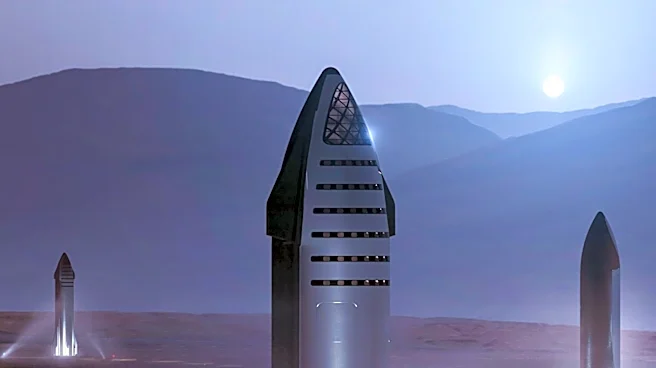
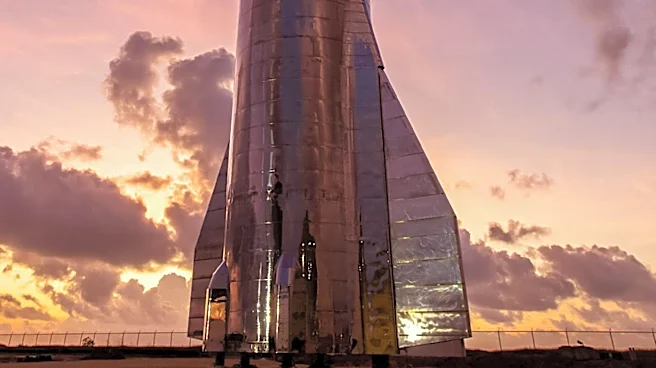
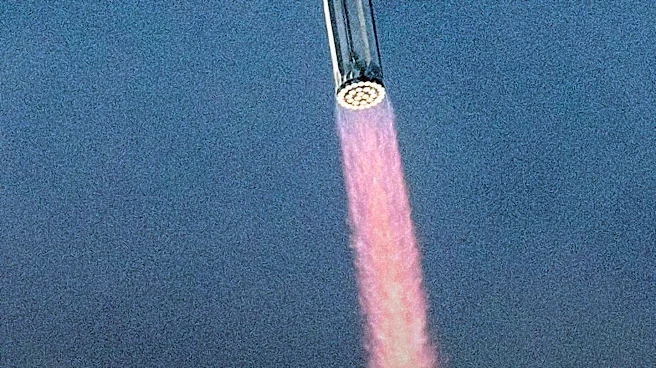
advancements that could make the transformation of Mars into a habitable planet a legitimate area of scientific research. These advancements include reduced launch costs due to SpaceX's Starship, breakthroughs in synthetic biology, and improved climate modeling. The workshop summary outlines a potential roadmap for terraforming, starting with warming the planet using engineered aerosols or greenhouse gases to melt ice reserves and create stable liquid water. The introduction of engineered extremophiles could then begin the slow process of altering the Martian atmosphere to support life. However, the process would take centuries, and significant scientific and ethical questions remain, such as the impact on Mars's natural history and the potential destruction of indigenous Martian life.
Why It's Important?
The reassessment of terraforming Mars has significant implications for space exploration and the future of human colonization of other planets. If successful, it could pave the way for human settlement on Mars, providing a new frontier for humanity. The technological advancements required for terraforming could also have applications on Earth, such as developing sustainable life support systems and environmentally friendly technologies. However, the ethical considerations of altering another planet's ecosystem and the potential loss of scientific knowledge about Mars's natural state present challenges that must be addressed. The discussion also reflects a broader shift in space exploration priorities, focusing on long-term sustainability and the potential for human life beyond Earth.
What's Next?
The next steps involve further research and small-scale experiments to explore the feasibility of terraforming techniques. This includes more sophisticated climate modeling and laboratory research to understand the potential impacts on Mars's environment. Future Mars missions may incorporate localized warming experiments to test these concepts. The scientific community will need to address the ethical implications and develop guidelines for responsible exploration and potential colonization. As the conversation shifts from 'could we?' to 'should we?', international collaboration and public engagement will be crucial in shaping the future of Mars exploration.
Beyond the Headlines
The potential terraforming of Mars raises profound questions about humanity's role in the universe and our responsibility to other planets. It challenges us to consider the long-term consequences of our actions and the ethical implications of altering another world's ecosystem. The discussion also highlights the need for a deeper understanding of Mars's geology and climate, as well as the potential for discovering indigenous life forms. As we explore the possibility of living on Mars, we must also reflect on our stewardship of Earth and the lessons we can learn from our own planet's environmental challenges.