






What's Happening?
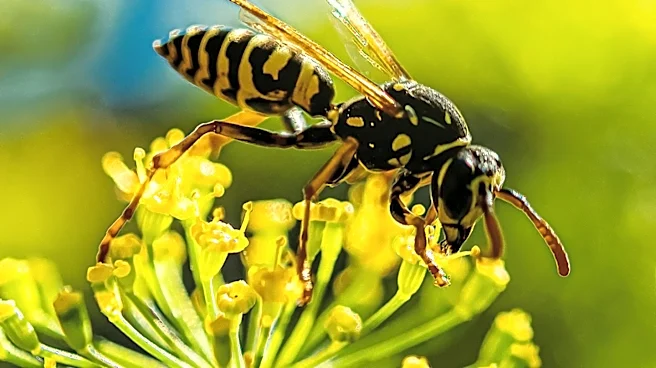
An invasive species of hornet, known as the yellow-legged hornet, has been discovered in North Carolina for the first time. The presence of these hornets was confirmed in Matthews, Union County, near the Mecklenburg County line. A homeowner reported unusual
hornet activity at a hummingbird feeder, prompting a survey that identified additional adult yellow-legged hornets. Dr. Bill Foote, a state agriculture official, described these hornets as aggressive pests, particularly dangerous to honeybees and other pollinators. The discovery has led to increased surveillance in southern Union and Mecklenburg counties. The state has set over 200 traps in the area to capture and remove the hornets. Beekeepers have been advised to watch for hornets exhibiting hawking-like behavior around hives, as they prey on bees and can cause colony failures.
Why It's Important?
The introduction of yellow-legged hornets poses a significant threat to North Carolina's beekeeping industry, which is vital for pollination and agriculture. Honeybees play a crucial role in pollinating crops, and their decline could have severe economic and ecological impacts. The hornets' presence could lead to reduced honey production and increased costs for beekeepers who may need to implement additional protective measures. The state's proactive response, including setting traps and alerting beekeepers, aims to mitigate these risks. However, the situation underscores the broader issue of invasive species and their potential to disrupt local ecosystems and economies.