







What's Happening?
Motlatjo Makaepea, Chief Director of the Gauteng Department of Agriculture and Rural Development, emphasized the need for stronger partnerships to support emerging beekeepers during a recent webinar celebrating World Bee Day 2026. Makaepea highlighted
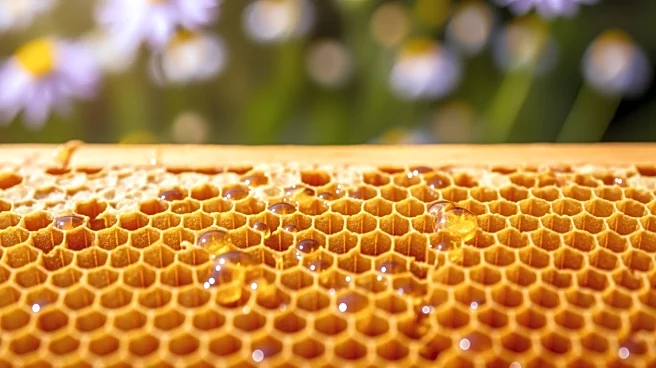
that beekeeping extends beyond honey production, playing a crucial role in livelihoods, food security, and sustainable agricultural development. He pointed out that pollination services are vital for crop production and agricultural sustainability. The Gauteng Department is actively supporting emerging beekeepers, particularly women, through training, hive distribution, and capacity-building programs. Makaepea praised the collaboration between government departments, researchers, industry bodies, and educators in strengthening the beekeeping sector.
Why It's Important?
The emphasis on supporting emerging beekeepers is significant for several reasons. Beekeeping contributes to environmental conservation and economic development by enhancing agricultural productivity through pollination. By supporting new entrants, particularly women, the sector can create livelihoods and strengthen local economies. The collaboration between various stakeholders ensures a comprehensive approach to developing the beekeeping industry, which is essential for long-term sustainability. This initiative aligns with broader goals of food security and economic empowerment, particularly in rural areas where agriculture is a primary source of income.
What's Next?
The continued growth of the beekeeping sector will likely depend on sustained collaboration and investment. Future steps may include expanding training programs, increasing awareness campaigns, and securing more resources for emerging beekeepers. Stakeholders may also focus on enhancing the commercial opportunities within the beekeeping value chain, beyond honey production. The success of these initiatives could serve as a model for other regions looking to develop their agricultural sectors through similar partnerships and support systems.
Beyond the Headlines
The development of the beekeeping sector has broader implications for environmental sustainability and economic resilience. By focusing on pollination services, the initiative supports biodiversity and the health of ecosystems. Additionally, empowering women and emerging beekeepers can lead to more inclusive economic growth, addressing social inequalities. The emphasis on collaboration highlights the importance of multi-stakeholder approaches in tackling complex challenges in agriculture and rural development.