
What's Happening?
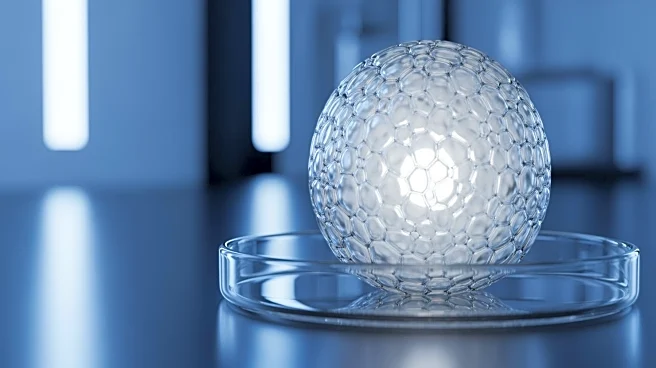
Researchers at the University Hospital Bonn and the University of Bonn have made significant advancements in retinal organoid research by integrating vascular networks into these organoids. This development
enhances the survival and function of retinal cells, particularly retinal ganglion cells, which are crucial for transmitting visual information to the brain. By combining human stem cell-derived retinal organoids with endothelial cells, the team created lumen-like networks that supply nutrients and oxygen, preserving the sensitive retinal cells. This innovation could improve the modeling of retinal diseases and the testing of new drugs.
Why It's Important?
The creation of vascularized retinal organoids represents a major step forward in the study of retinal diseases and drug testing. These organoids provide a more accurate model of human retinal tissue, allowing researchers to study disease mechanisms and test potential treatments more effectively. The ability to maintain functional retinal ganglion cells in vitro opens new avenues for developing therapies for conditions like retinopathy and other degenerative eye diseases. This research could lead to more effective treatments and a better understanding of retinal health.