


What's Happening?
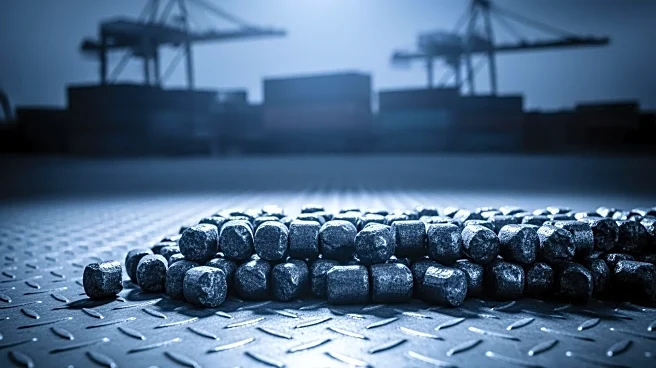
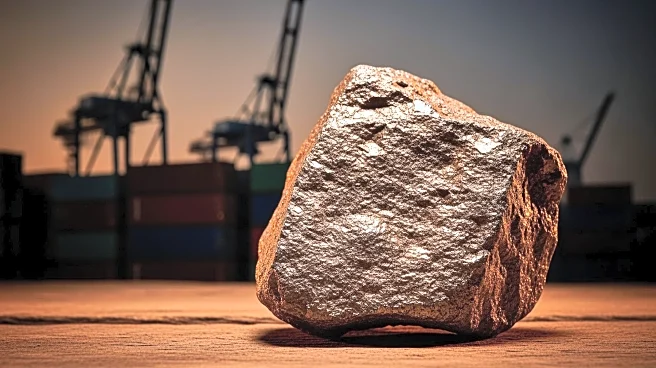
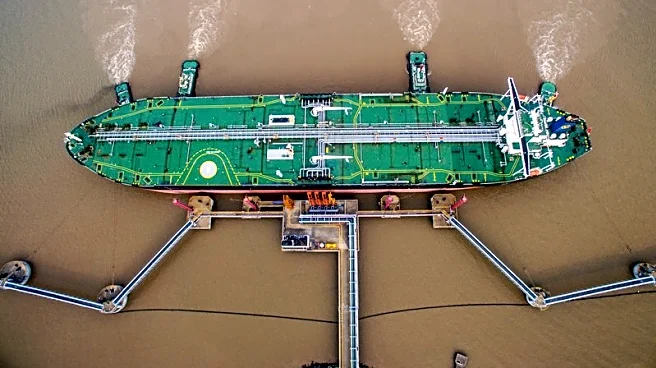
Iron-ore prices have risen as China expands its restrictions on purchasing seaborne cargoes from BHP, a major supplier. The most-traded iron-ore contract on China's Dalian Commodity Exchange increased by 1.38%, while the Singapore Exchange saw a 1.53%
rise. These restrictions, part of a prolonged contract dispute, have raised concerns about supply availability. BHP, the world's third-largest iron-ore producer, faces challenges as China, a key consumer, limits purchases of its flagship products.
Why It's Important?
The restrictions imposed by China on BHP's iron-ore cargoes highlight the complexities of international trade relations and their impact on global markets. For the U.S., this development could influence commodity prices and affect industries reliant on steel production. The situation underscores the importance of stable trade agreements and the potential economic ripple effects of disputes between major global players. Stakeholders in the mining and steel industries may need to reassess supply chains and pricing strategies in response to these market shifts.
What's Next?
As the dispute between China and BHP continues, further market volatility is expected. Traders and industry analysts will be monitoring the situation closely for any resolution or escalation. The outcome could influence future trade negotiations and policies, particularly concerning resource-dependent industries. Additionally, other iron-ore suppliers may seek to capitalize on the reduced availability of BHP's products, potentially altering market dynamics.