







What's Happening?
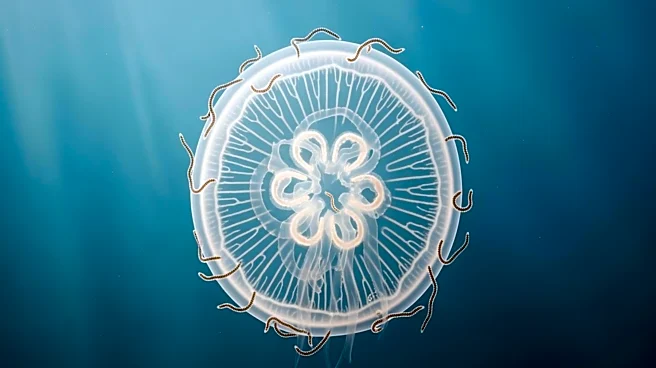
Researchers have discovered polychaete worms inside jellyfish collected from Denmark's fjords, marking the first documented instance of this feeding behavior. The study, published in Hydrobiologia, reveals that jellyfish, known for their omnivorous diet,
have been consuming these bottom-dwelling worms during their spawning season. This behavior was observed in two jellyfish species: the common moon jelly and the invasive comb jelly. The worms rise from their burrows in large numbers to spawn, providing a seasonal feeding opportunity for jellyfish and other predators.
Why It's Important?
This discovery highlights a previously overlooked interaction between seabed and open-water ecosystems, suggesting a more complex energy flow within coastal environments. The presence of polychaete worms in jellyfish diets indicates a seasonal burst of energy that could influence jellyfish populations, particularly the invasive comb jelly, which may disrupt local ecosystems if its numbers increase. Understanding these interactions is crucial for developing accurate models of coastal ecosystems and managing invasive species, which can have significant ecological and economic impacts.