




What's Happening?
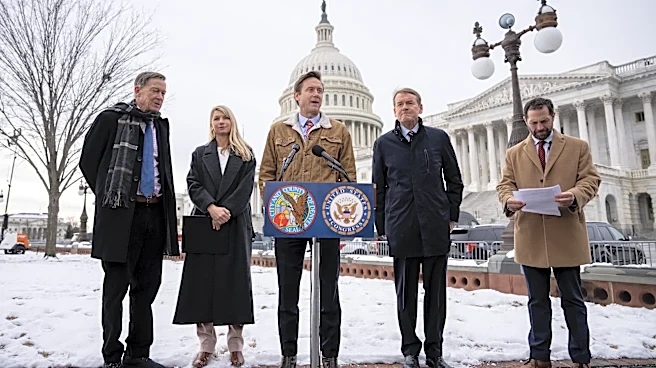
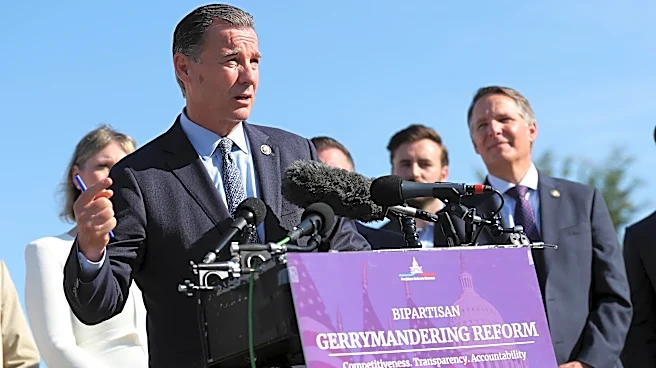
U.S. Representatives Suhas Subramanyam (VA-10) and Vince Fong (CA-20) have introduced the Promoting High-skilled Doctoral Talent (PHD Talent) Act, a bipartisan legislative effort aimed at expediting the process for students to earn Ph.D.s in critical
and emerging technology fields. This bill seeks to bolster the American scientific and engineering workforce, thereby maintaining the nation's global leadership in technological innovation. The proposed legislation establishes a five-year pilot program under the Department of Energy (DOE). This program will foster collaborations among universities, National Laboratories, and private industry, offering students hands-on research experience, mentorship, and workforce training. The goal is to enable students to obtain advanced degrees in less time while upholding rigorous academic standards. Fields covered include artificial intelligence, quantum science, semiconductors, cybersecurity, and advanced manufacturing. The bill also ensures that taxpayer-funded student support is exclusively for U.S. citizens, U.S. nationals, and lawful permanent residents.
Why It's Important?
This legislation is crucial for addressing a perceived shortage of scientists, engineers, and mathematicians in the United States. By streamlining the Ph.D. process in vital technological sectors, the PHD Talent Act aims to strengthen the pipeline of domestic researchers. This initiative is expected to drive breakthrough discoveries in science, health, and technology, reinforcing America's competitive edge globally. Congressman Fong emphasized that a robust pool of skilled American workers is essential for both the nation's economy and national security, particularly in areas like cybersecurity, advanced manufacturing, and medical innovations. The bill's focus on critical technologies directly supports industries vital for future economic growth and defense capabilities, ensuring that the U.S. has the homegrown talent required to innovate and lead in these strategic domains. The collaboration between academia, government labs, and industry is designed to create a more integrated and efficient research ecosystem.
What's Next?
The PHD Talent Act will now proceed through the legislative process in Congress, where it will be subject to committee review, potential amendments, and votes in both the House and Senate. If passed, the Department of Energy will be tasked with establishing the five-year pilot program, including developing guidelines for university, National Laboratory, and industry partnerships, and setting up the fellowship application process. Universities and research institutions will likely begin preparing proposals to participate in the program, aiming to attract funding and students. The success of the pilot program will be closely monitored, and its outcomes could influence future policy decisions regarding STEM education and workforce development. Stakeholders in the technology and defense sectors will likely advocate for its swift passage, given the stated goals of enhancing national security and economic competitiveness through a skilled workforce.
Beyond the Headlines
The introduction of the PHD Talent Act highlights a broader national concern about maintaining technological superiority and addressing workforce gaps in critical sectors. This legislative effort reflects a strategic pivot towards fostering domestic talent in response to global competition and evolving geopolitical landscapes. Beyond simply accelerating degree attainment, the bill's emphasis on hands-on experience and industry collaboration could reshape traditional academic pathways, making doctoral programs more directly aligned with real-world industry needs. This could lead to a more practical and applied research focus within universities. Furthermore, by restricting funding to U.S. citizens and permanent residents, the bill underscores a national security imperative to cultivate a secure and loyal scientific workforce, potentially influencing immigration policies related to highly skilled workers in the future.