

What's Happening?
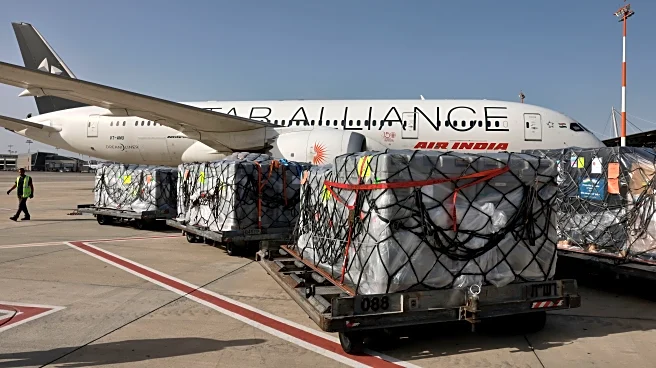
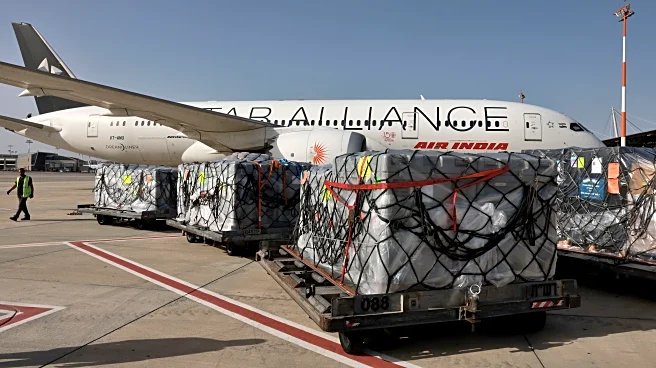
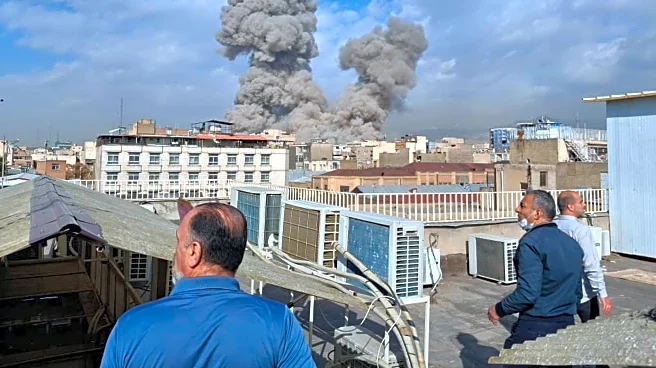
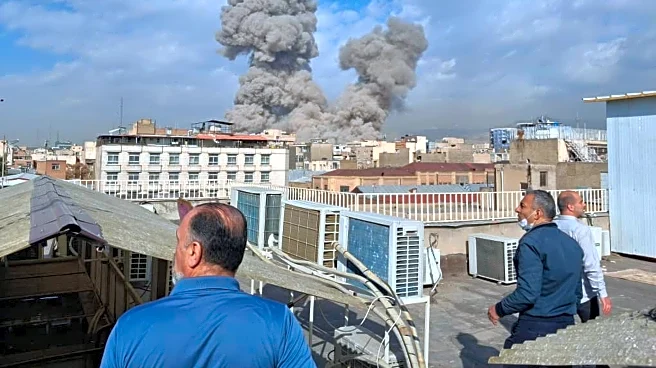
Global airlines have canceled flights across the Middle East following military strikes by the United States and Israel on Iran. The conflict has led to the closure of airspace over Iran, Iraq, Kuwait, the United Arab Emirates, Lebanon, Bahrain, and Jordan.
The European Union's aviation regulator has advised airlines to avoid the affected airspace. Airlines such as Air France, KLM, British Airways, and Lufthansa have suspended flights to key destinations like Tel Aviv, Beirut, and Dubai. The cancellations are part of a broader response to ensure passenger safety amid escalating regional tensions.
Why It's Important?
The widespread flight cancellations underscore the significant impact of geopolitical conflicts on international air travel. The Middle East is a major transit hub, and disruptions in this region can lead to significant economic and logistical challenges for airlines and passengers. The situation highlights the interconnectedness of global transportation networks and the potential for regional conflicts to have far-reaching effects. Airlines face operational challenges and financial losses, while passengers encounter travel disruptions and uncertainty. The event emphasizes the need for robust crisis management strategies in the aviation industry.
What's Next?
Airlines will continue to assess the situation and make operational decisions based on safety considerations and geopolitical developments. The resumption of flights will depend on the stabilization of the region and the reopening of airspace. Travelers are advised to stay updated on flight information and potential changes. Diplomatic efforts may be necessary to de-escalate tensions and restore normalcy in the region, which could facilitate the resumption of regular air travel. The situation may also prompt discussions on enhancing international cooperation and crisis management in the aviation sector.