

What's Happening?
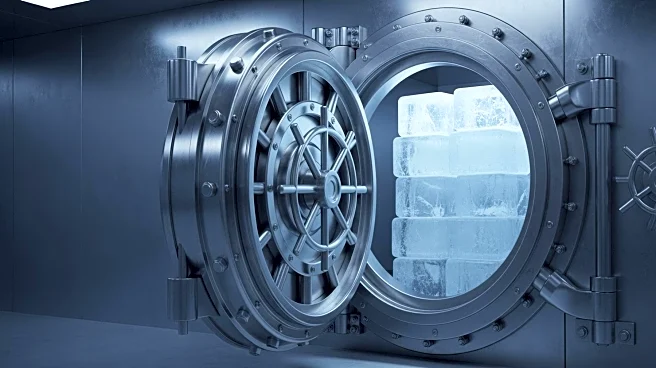
Hungarian Prime Minister Viktor Orbán has expressed strong opposition to the European Union's proposal to use frozen Russian assets to fund the rebuilding of Ukraine. Speaking to CNBC, Orbán described the proposal as a 'dead end,' citing insufficient
support within the EU. The European Commission is considering this approach to provide financial assistance to Ukraine, but Orbán, known as a close ally of Russia within the EU, has been a vocal critic. Other EU countries, including Belgium, Italy, and Bulgaria, have also raised concerns about the legal and financial implications of such a move. The Kremlin has warned that using these assets could be seen as a justification for war, and Russia's central bank has initiated legal action against Euroclear, a Brussels-based clearing house holding significant frozen assets.
Why It's Important?
The opposition from Hungary and other EU members highlights the challenges the European Union faces in reaching a consensus on how to support Ukraine financially. The use of frozen Russian assets is a contentious issue, with potential legal and diplomatic repercussions. Hungary's stance complicates the EU's efforts to provide timely financial aid to Ukraine, which is crucial for its economic stability and reconstruction efforts. The situation underscores the geopolitical tensions within the EU regarding its relationship with Russia and the ongoing conflict in Ukraine. The outcome of this debate could significantly impact EU-Russia relations and the EU's ability to act collectively in foreign policy matters.
What's Next?
The European Council meeting, set to conclude soon, will continue to discuss funding options for Ukraine. If the proposal to use frozen Russian assets is blocked, the EU may need to explore alternative funding mechanisms. One possibility is forming a 'coalition of the willing' among member states willing to provide financial support independently. The EU's decision-making process requires unanimity, so any opposition can stall progress. The ongoing discussions will determine the EU's next steps in supporting Ukraine and managing its internal divisions over the issue.