
What's Happening?
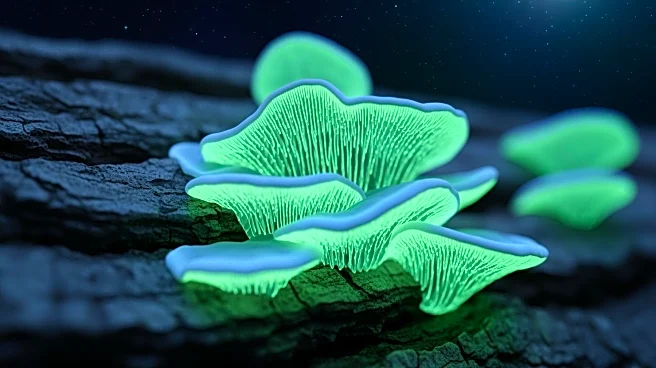
NASA is investigating a unique fungus discovered in the Chernobyl Exclusion Zone that thrives on radiation, potentially offering solutions for space travel challenges. The fungus, Cladosporium sphaerospermum,
was found growing in the highly radioactive environment of the Chernobyl nuclear reactor. Research led by Ukrainian microbiologist Nelli Zhdanova revealed that the fungus uses a process called radiosynthesis, similar to photosynthesis, but instead of sunlight, it utilizes ionizing radiation. This discovery has attracted interest from space researchers, as the fungus could provide passive radiation protection for astronauts. Experiments conducted on the International Space Station showed that the fungus grows faster in space and can block radiation, suggesting its potential as a bioshield.
Why It's Important?
The ability of Cladosporium sphaerospermum to absorb radiation could revolutionize space travel by providing a natural and cost-effective method of protecting astronauts from harmful cosmic radiation. This is crucial for long-duration missions, such as those to Mars or the Moon, where radiation exposure is a significant risk. Additionally, the fungus's potential to recycle waste and produce edible biomass or pharmaceuticals could reduce the need for resupply missions, making space exploration more sustainable. The research highlights the innovative use of biological organisms to solve complex problems in space travel, potentially reducing costs and increasing the safety of astronauts.
What's Next?
Further research is needed to fully understand the capabilities of Cladosporium sphaerospermum and its applications in space travel. Scientists are exploring its ability to break down waste products and produce useful materials in orbit. If successful, this could lead to the development of new technologies for radiation protection and resource recycling in space. The findings may also inspire additional studies on other radiotrophic organisms and their potential uses beyond Earth. As the scientific community continues to investigate these possibilities, the fungus could become a key component in future space missions.
Beyond the Headlines
The exploration of Cladosporium sphaerospermum underscores the broader implications of using biological organisms to address environmental challenges. The fungus's ability to thrive in extreme conditions highlights the resilience of life and its potential to adapt to harsh environments. This research may pave the way for new biotechnological advancements, not only in space travel but also in fields such as waste management and environmental remediation. The study of radiotrophic fungi could lead to breakthroughs in understanding how life can survive and evolve in high-radiation environments, offering insights into the possibilities of life beyond Earth.