





What's Happening?
The late primatologist Frans de Waal's final book, 'Minds I've Met: From denying to embracing the inner lives of animals,' has been released posthumously. De Waal, who passed away in 2024, left behind documents and audio files that allowed his wife, Catherine
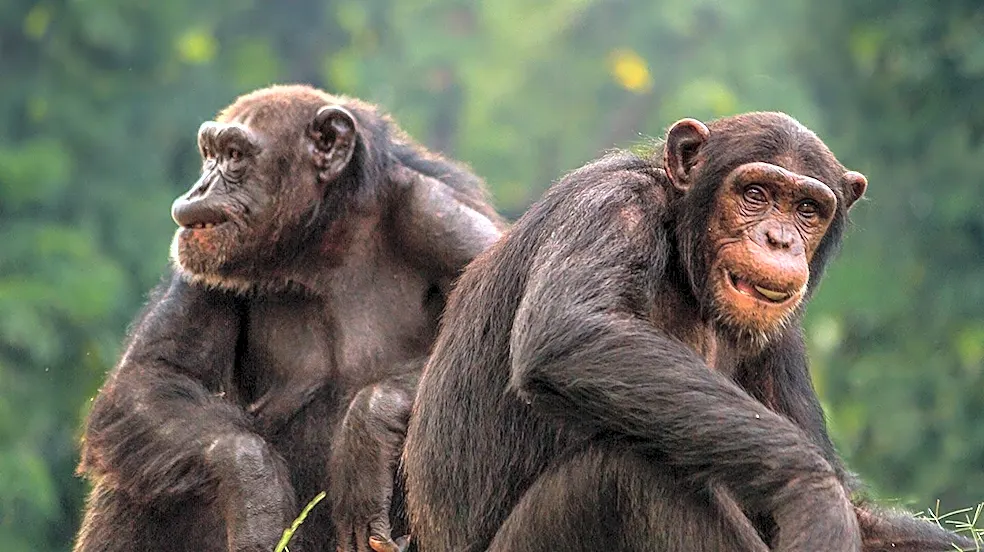
Marin, psychologists Stephanie Preston and Sarah Brosnan, and anthropologist Peter Verbeek to complete the work. The book combines scientific insights with personal memoirs, tracing de Waal's career and the evolving understanding of animal cognition and emotion. It challenges the 20th-century scientific view that animals were mere automata, arguing instead that they possess inner lives, can think, experience emotions, and display empathy. The book recounts de Waal's early experiences, such as observing bored chimpanzees in a research lab, which led him to question prevailing scientific paradigms that often dismissed animal intelligence and feelings.
Why It's Important?
This publication is significant as it represents the culmination of a lifetime of groundbreaking work by a highly influential primatologist. De Waal's ideas, once controversial, are now widely accepted and have fundamentally reshaped how humans perceive and interact with non-human animals. His research, including foundational works like 'Chimpanzee Politics' and 'Bonobo: The forgotten ape,' challenged anthropocentric views and highlighted the complex social structures, emotional depth, and cognitive abilities of animals. The book's blend of science and memoir makes these complex ideas accessible to a broader audience, fostering greater public understanding and empathy towards animals. It underscores the ethical implications of how animals are studied and treated, particularly in research settings, by revealing past practices that involved 'satisfactory states of deprivation' and the resistance to acknowledging animal sentience.
What's Next?
The release of 'Minds I've Met' is likely to further stimulate discussions within the scientific community and among the general public regarding animal welfare, ethics in research, and the philosophical implications of animal consciousness. While the book's ending is noted as somewhat scattered due to its posthumous completion, its overall impact is expected to reinforce de Waal's legacy and encourage continued exploration into the inner lives of animals. The book may inspire new research directions in ethology and animal psychology, focusing on empathy, culture, and cognitive abilities across various species. It could also influence policy debates related to animal rights and the treatment of animals in captivity and research, pushing for more humane and scientifically informed approaches.
Beyond the Headlines
Beyond its immediate scientific and biographical value, 'Minds I've Met' delves into profound ethical and cultural dimensions. De Waal's work consistently highlighted the shared evolutionary roots of human and animal behaviors, suggesting that many of our moral intuitions have parallels in the animal kingdom. This perspective challenges the traditional human-animal divide and encourages a re-evaluation of what it means to be 'human' and 'conscious.' The book implicitly critiques the reductionist scientific approaches of the past, advocating for a more holistic understanding that acknowledges the subjective experiences of other species. It fosters a deeper appreciation for biodiversity and the intricate web of life, potentially leading to shifts in cultural attitudes towards animals, moving from viewing them as mere resources to recognizing them as sentient beings with intrinsic value.