


What's Happening?
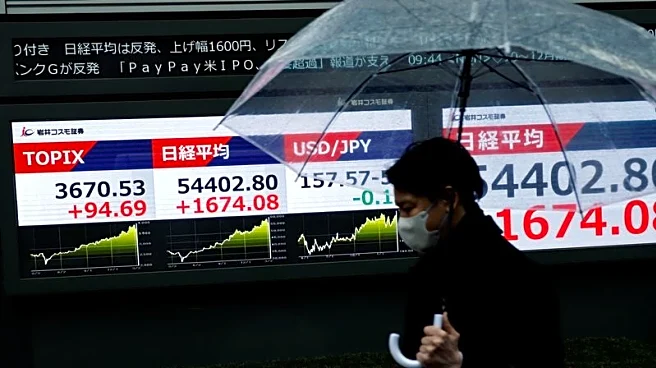
Japan's finance minister has issued a warning about the extreme volatility in foreign exchange markets, particularly concerning the yen. The minister emphasized that the government is prepared to take decisive action if necessary to stabilize the currency.
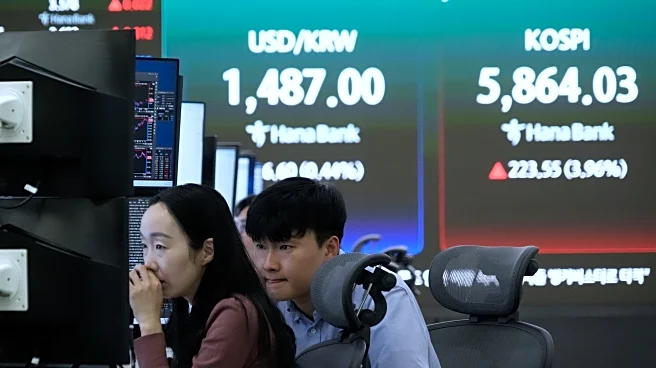
This comes after recent discussions between Japan and South Korea, where both nations expressed concern over the sharp declines in their currencies. The yen has been under pressure due to strong demand for the U.S. dollar, driven by global geopolitical tensions and rising energy prices. Historically, Japanese policymakers have avoided commenting on specific currency levels, focusing instead on rapid or disorderly movements. The current situation has heightened sensitivity among authorities, who are closely monitoring the markets for potential intervention.
Why It's Important?
The potential intervention by Japan in the currency markets is significant as it reflects the broader impact of geopolitical tensions on global economies. The yen's depreciation could affect Japan's economic stability, influencing trade balances and inflation rates. For the U.S., a stronger dollar against the yen might impact export competitiveness and trade relations. Additionally, Japan's readiness to intervene highlights the interconnectedness of global financial markets, where actions by one major economy can ripple through others. Investors and policymakers worldwide are likely to watch Japan's moves closely, as any intervention could signal shifts in international economic strategies and affect global market dynamics.
What's Next?
Japan's government is currently focusing on verbal warnings while monitoring developments in global financial markets. If currency volatility accelerates, Japan may move beyond rhetoric and intervene directly in the markets. Such intervention could involve buying or selling currencies to stabilize the yen. The situation is fluid, and investors will be keenly observing any signs of direct action from Japan. Additionally, other countries may respond to Japan's actions, potentially leading to coordinated efforts to address currency volatility on a broader scale.