


What's Happening?
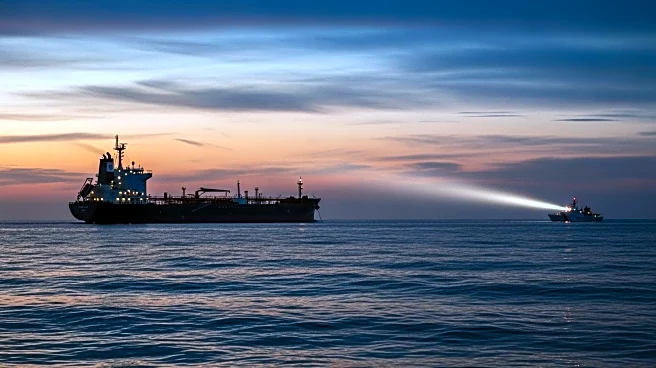
The U.S. Coast Guard is actively pursuing a tanker linked to Venezuela, named Bella 1, in Caribbean waters. The vessel has refused to allow Coast Guard crews to board, prompting specialized teams to prepare for a possible forced seizure. This incident
is part of a broader U.S. campaign to enforce sanctions against Venezuelan President Nicolás Maduro, who is accused of using vessels for narco-trafficking. President Trump has emphasized the U.S. strategy to seize tankers carrying sanctioned crude, framing it as a move to reclaim oil from Maduro's government. Recent interdictions have escalated tensions, with U.S. forces stopping another sanctioned vessel off Venezuela. The Coast Guard is coordinating with U.S. Southern Command, while the White House has yet to respond to inquiries about the situation.
Why It's Important?
The pursuit of the Bella 1 highlights the U.S. commitment to enforcing sanctions against Venezuela, which could have significant implications for international maritime law and U.S.-Venezuela relations. The operation tests the legitimacy of U.S. sanctions at sea and could influence global energy markets. Success in boarding the tanker would demonstrate U.S. resolve in blocking sanctioned crude from reaching foreign buyers, potentially affecting oil routes to China and Southeast Asia. Failure, however, could embolden other vessels to evade sanctions, challenging U.S. enforcement capabilities. The situation also raises concerns about the potential for broader conflict and the need for careful navigation of international maritime jurisdiction.
What's Next?
The Coast Guard is monitoring the Bella 1's movements, prepared to act if the vessel attempts to dock or transfer cargo. President Trump's commitment to capturing the ship places pressure on Coast Guard commanders to weigh the risks of a forced boarding. The outcome of this pursuit could influence future U.S. strategies in sanction enforcement and impact diplomatic relations with countries involved in Venezuelan oil trade. The situation may also prompt discussions among U.S. lawmakers regarding the scope of military and maritime power in sanction enforcement.
Beyond the Headlines
The pursuit of the Bella 1 could redefine U.S. maritime strategy and influence international perceptions of U.S. sanctions enforcement. Success in boarding the tanker might encourage allies to join enforcement efforts and deter shippers from using flags of convenience to evade sanctions. Conversely, failure could embolden other nations, such as Russia and Iran, to challenge U.S. sanctions. The incident underscores the complexities of balancing enforcement with diplomatic relations and the potential for maritime operations to escalate into broader geopolitical conflicts.