








What's Happening?
Iran's proposal to impose tolls on the Strait of Hormuz has been met with resistance from Gulf nations, who are siding with the United States. The Gulf Cooperation Council (GCC) met in Jeddah, Saudi Arabia, to discuss regional developments and coordinate
their response to Iran's plan. Oman, a key GCC member, rejected Iran's proposal to split control of the strait, aligning with President Trump's stance that Iran should not be allowed to toll nations for access. The GCC's unified position reflects a broader regional consensus against Iran's attempts to assert control over the critical oil chokepoint.
Why It's Important?
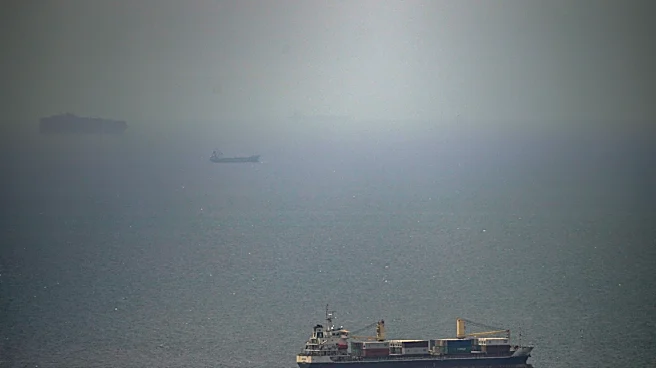
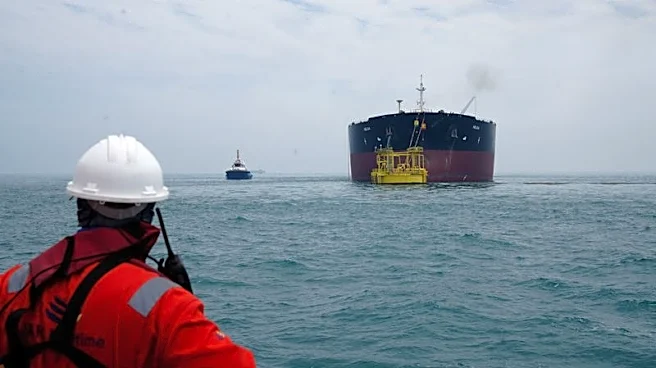
The Strait of Hormuz is a vital maritime passage for global oil shipments, and control over it has significant geopolitical and economic implications. Iran's attempt to toll the strait could disrupt global oil markets and escalate regional tensions. The GCC's rejection of Iran's plan underscores the strategic importance of the strait and the potential consequences of Iranian control. The alignment of Gulf nations with the U.S. highlights the broader geopolitical dynamics at play, with implications for regional stability and international energy security.
What's Next?
The ongoing conflict and negotiations between the U.S. and Iran will continue to shape the geopolitical landscape in the region. The GCC's stance against Iran's toll plan may lead to further diplomatic efforts to resolve the conflict and ensure the free flow of oil through the strait. The potential for renewed hostilities remains a concern, and the international community will be closely monitoring developments in the region. The outcome of these negotiations will have significant implications for regional stability and global energy markets.