



What's Happening?
A former North Charleston city councilman, Mike A. Brown, appeared in court for a contempt hearing due to his failure to pay a civil judgment of nearly $1 million. The judgment stems from a 2023 civil case where Brown was ordered to pay Tess Singleton
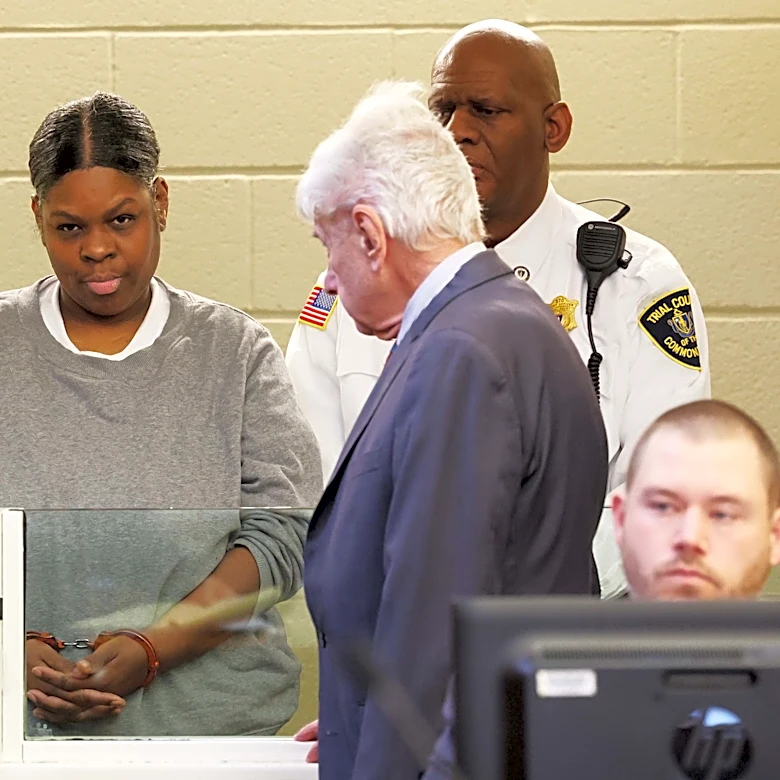
and Benquetta White, two women who were assaulted at his formerly owned restaurant, Blue Note Bistro, in 2021. Brown was arrested on August 3 for allegedly not providing financial documents as mandated by the court. His legal team filed a motion to reconsider his bench warrant, stating that most of the missing financial records have since been submitted. During the recent hearing, Brown and his attorney, Trimeia Frazier, presented a check for $7,200 to Jesse Sanchez, the attorney representing the plaintiffs, to cover attorney fees. Brown also agreed under oath to provide two-step verification codes to allow Sanchez access to his tax forms, which had been a point of contention for additional verification.
Why It's Important?
This case highlights the legal and financial repercussions faced by public officials, even after leaving office, and underscores the judiciary's commitment to enforcing civil judgments. The nearly $1 million unpaid judgment against former Councilman Brown is a significant sum, and his alleged non-compliance with court orders, including the failure to provide financial documents, led to his arrest and subsequent contempt hearing. This situation demonstrates that individuals, regardless of their past public standing, are subject to the same legal obligations. The plaintiffs, Tess Singleton and Benquetta White, have been awaiting payment since the judgment was made in October 2023, making this Judge Mikell Scarborough's oldest pending proceeding. The ongoing legal battle also brings to light discrepancies in Brown's statements regarding his business affiliations, with federal court documents from an unrelated corruption case suggesting he operates other restaurants, a claim he now disputes. This raises questions about transparency and accountability, particularly for individuals who have held positions of public trust.
What's Next?
The immediate next steps involve Brown providing the promised two-step verification codes for his tax forms to the plaintiffs' attorney, Jesse Sanchez, to ensure full access to his financial records. Sanchez has indicated that he will continue to pursue the judgment against Brown and his co-defendants. The payment of the remaining balance of over $965,077.65 is still pending, though Brown has stated his intention to establish a payment plan to resolve the debt. The hearing also precedes Brown's sentencing in an unrelated federal corruption case, where he was sentenced in June to 24 months in federal prison, a $10,000 fine, and 100 hours of community service for conspiracy to commit bribery and honest services wire fraud. The outcome of the civil judgment and the resolution of his financial obligations will likely be influenced by his ongoing legal challenges and his ability to demonstrate compliance with court orders.
Beyond the Headlines
This case delves into the complex intersection of civil liability, public accountability, and the enforcement of legal judgments. The discrepancies in Brown's statements about his business interests, particularly when contrasted with federal court documents, raise ethical questions about the candor expected from individuals, especially those who have served in public office. The prolonged nature of the civil judgment enforcement process, dating back to 2023, underscores the challenges victims can face in receiving restitution, even after a favorable court ruling. Furthermore, the contempt hearing and Brown's arrest serve as a stark reminder that legal obligations, such as providing financial disclosures, are not optional and carry serious consequences. This situation could also prompt broader discussions within North Charleston about the conduct of public officials and the mechanisms in place to ensure their accountability, both during and after their tenure.