
What's Happening?
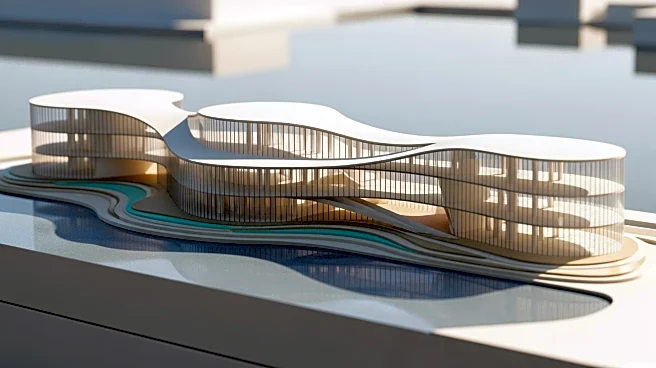
Sydney is preparing to open a new $830 million fish market, designed by 3XN Architects, which aims to redefine the city's relationship with its waterfront. The market, located on Blackwattle Bay, features
a dramatic wave-shaped roof and is set to become the largest fish market in the Southern Hemisphere. It is expected to double visitor numbers, drawing over six million people annually. The project integrates culinary, architectural, and environmental elements, offering a vibrant public hub that combines traditional market functions with modern amenities such as chef-driven restaurants and waterfront viewing points.
Why It's Important?
The new Sydney Fish Market is significant as it represents a major urban renewal project, enhancing Sydney's status as an international culinary destination. It aims to boost tourism and local commerce by attracting millions of visitors each year. The market's design focuses on sustainability, with features like rainwater collection and energy-efficient systems, setting a benchmark for environmentally responsible urban development. This project not only revitalizes a key economic and social hub but also strengthens Sydney's cultural and architectural landscape.
What's Next?
The market is scheduled to open next month, following seven years of planning and construction. It is expected to become a central attraction in Sydney, second only to the Opera House. The project faced budget challenges, including construction delays and a crane collapse, but it remains on track to open as planned. The market's success could influence future urban development projects, emphasizing the integration of sustainability and public engagement in large-scale constructions.
Beyond the Headlines
The Sydney Fish Market project highlights the potential for blending industry with leisure, creating spaces that serve both commercial and public interests. It challenges traditional notions of market spaces by offering a modern, aesthetically pleasing environment that maintains the authenticity of a traditional fish market. This approach could inspire similar projects worldwide, promoting the idea that urban spaces can be both functional and enjoyable, enhancing the quality of life for residents and visitors alike.