







What's Happening?
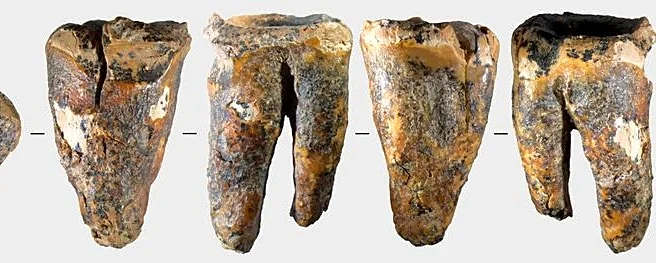
A groundbreaking fossil discovery in Ethiopia is reshaping the understanding of human evolution. Fossils from the Ledi Geraru site indicate that multiple hominin species, including Australopithecus and early Homo, coexisted in the same region between
2.6 and 2.8 million years ago. This finding challenges the traditional linear model of human evolution, suggesting a more complex evolutionary tree with overlapping species. The research, led by Arizona State University, highlights the presence of an unidentified Australopithecus species and the oldest known Homo fossils, providing new insights into the diversity of early human ancestors.
Why It's Important?
This discovery is significant as it alters the conventional view of human evolution as a straightforward progression from ape-like ancestors to modern humans. The coexistence of multiple hominin species suggests a more intricate evolutionary process with various lineages existing simultaneously. This complexity could lead to a reevaluation of how human traits evolved and the environmental factors that influenced these changes. The findings also underscore the importance of continued fossil research in understanding human origins and the evolutionary pressures that shaped our species.
What's Next?
Researchers will continue to study the Ledi Geraru fossils to gain a deeper understanding of the relationships between different hominin species. Further excavations and analyses are expected to provide more evidence on the ecological and evolutionary dynamics of early human ancestors. The identification of the mysterious Australopithecus species remains a priority, as additional fossil material is needed to formally classify it. These efforts will contribute to a more comprehensive picture of human evolution and the factors that led to the emergence of Homo sapiens.