
What's Happening?
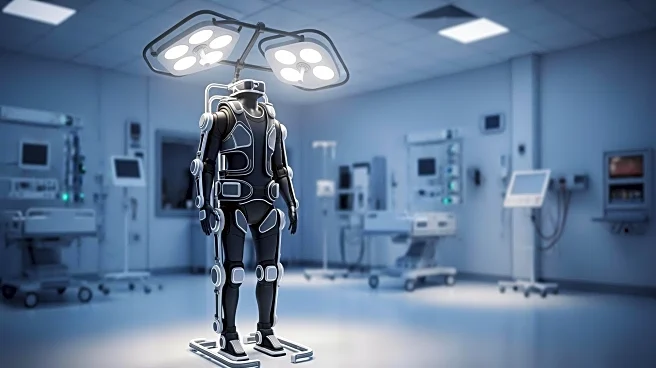
The first patient has been enrolled in a clinical trial at Brigham and Women’s Hospital to evaluate the Atalante X, a robotic exoskeleton developed by Wandercraft. This trial aims to determine if the self-balancing
exoskeleton can be safely and effectively used in a thoracic surgical intensive care unit (ICU). The exoskeleton is designed to assist patients who have undergone thoracic surgery, a group that often struggles with mobility post-operation. The trial will assess the exoskeleton's impact on early mobilization, which is crucial for improving outcomes such as cardiorespiratory function and psychological well-being. The Atalante X, which has been cleared by the U.S. Food and Drug Administration, is unique in that it does not require patients to use additional assistive devices like walkers or crutches.
Why It's Important?
This trial is significant as it explores the potential of robotic exoskeletons to transform post-surgical care in ICUs. Early mobilization is a critical yet underutilized strategy in improving recovery outcomes for thoracic surgery patients. By potentially enabling earlier and safer mobilization, the Atalante X could reduce the need for extensive human assistance, thereby alleviating staffing burdens in healthcare settings. Successful integration of such technology could lead to widespread adoption in hospitals, enhancing patient care and operational efficiency. Moreover, the trial's findings could influence future developments in robotic rehabilitation devices, expanding their use to other medical conditions and settings.
What's Next?
The clinical trial will run for approximately six months, involving at least five adult patients in the Thoracic Surgical Intensive Care Unit at Brigham and Women’s Hospital. Participants will engage in two exoskeleton sessions per week until their discharge. The trial will evaluate the exoskeleton across four domains: safety, feasibility, usability, and effectiveness. Insights gained from this study will guide future improvements in the exoskeleton's design and its clinical integration. Wandercraft is also working on bringing its technology into home settings with the Eve personal exoskeleton, which is expected to be commercially available later this year.