



What's Happening?
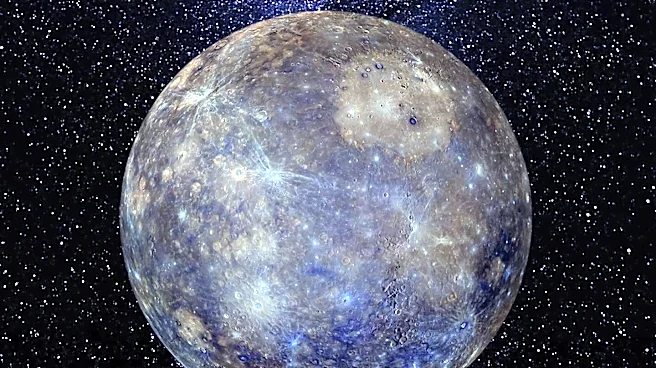
The planet Mercury has reached a magnitude of 1.0, making it visible in the early-morning sky. Observers can spot Mercury low on the eastern horizon about 40 minutes before sunrise. It appears left of the fading stars of Orion and below Mars in Taurus.
This celestial event provides an opportunity for sky watchers to view Mercury, which rises a little over an hour before the Sun. The visibility of Mercury is enhanced by its position just above the horizon, making it easier to locate compared to Mars, which fades out of view first. Observers are advised to use binoculars or telescopes for a better view but should ensure they put them away well before sunrise to avoid damage from the Sun's rays.
Why It's Important?
This event is significant for astronomy enthusiasts and educators as it provides a practical opportunity to observe Mercury, a planet that is often difficult to see due to its proximity to the Sun. Such events can inspire interest in astronomy and science education, encouraging people to learn more about the solar system. Additionally, observing celestial events like this can foster a greater appreciation for the natural world and the dynamics of planetary movements. For amateur astronomers, this is a chance to practice observational skills and engage with the astronomy community.