


What's Happening?
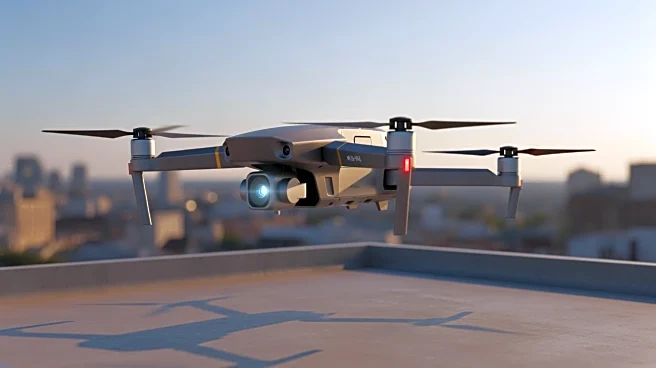
Drone journalism is transforming the way news is reported by providing new perspectives and cost-effective solutions for media coverage. Drones, or uncrewed aerial vehicles (UAVs), have become a vital tool for journalists, offering high-definition aerial footage
that enhances storytelling. This technology allows reporters to access difficult-to-reach areas, such as disaster zones or large-scale events, providing real-time coverage that was previously unattainable. The use of drones in journalism has grown significantly, with newsrooms adopting drone-as-a-service (DaaS) solutions to quickly deploy drones for live coverage. This shift is driven by the need for more immersive and timely reporting, as drones can capture continuous event footage and provide a bird's-eye view that traditional cameras cannot. The adoption of drones is also economically advantageous, as they are cheaper and faster to deploy than helicopters.
Why It's Important?
The integration of drones into journalism is significant as it enhances the ability of news organizations to deliver timely and comprehensive coverage. This technology not only improves the quality of reporting but also increases safety for journalists by reducing the need for them to enter hazardous areas. The cost-effectiveness of drones allows smaller news outlets to compete with larger organizations by providing high-quality aerial footage without the financial burden of traditional methods. Additionally, drones contribute to more informed public discourse by offering new angles and insights into events, thereby enriching the audience's understanding. As the demand for real-time and immersive news grows, drones are poised to play an increasingly important role in the media landscape.
What's Next?
As drone technology continues to evolve, its role in journalism is expected to expand further. News organizations will likely invest more in training and infrastructure to integrate drones into their reporting workflows. The development of advanced software for automated flight paths and footage processing will enhance the efficiency and accuracy of drone journalism. However, the industry must also address challenges such as privacy concerns and regulatory compliance to ensure ethical and legal use of drones. As these issues are navigated, drones will become an indispensable tool in the future of news reporting, offering new possibilities for storytelling and audience engagement.
Beyond the Headlines
The rise of drone journalism also raises important ethical and legal considerations. The ability of drones to capture high-resolution images from a distance poses privacy risks, necessitating strict guidelines for the use and storage of sensitive footage. Additionally, the regulatory landscape for drone operations varies widely, requiring journalists to navigate complex legal frameworks to ensure compliance. Despite these challenges, the potential for drones to revolutionize journalism is immense, offering new ways to engage audiences and provide deeper insights into global events. As technology advances, the balance between automation and human judgment will be crucial in maintaining the integrity and quality of news reporting.