




What's Happening?
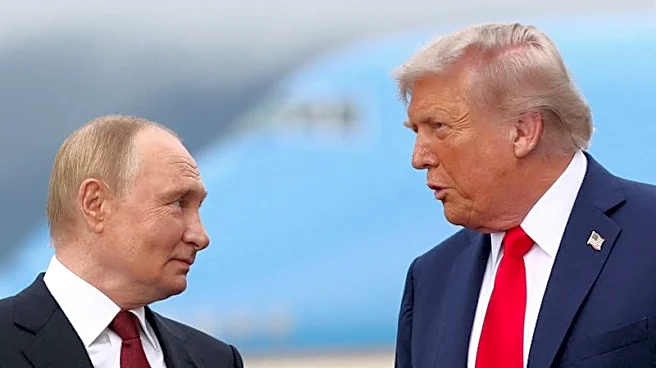
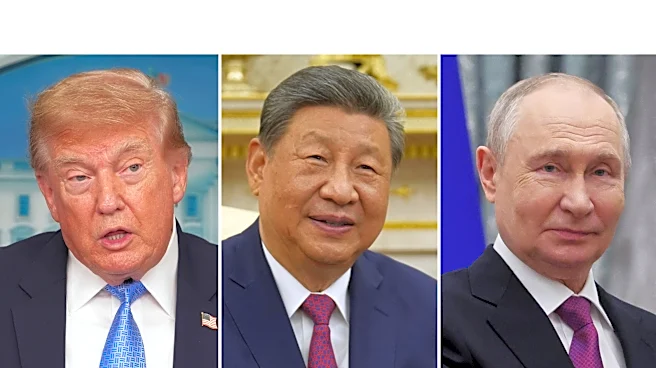
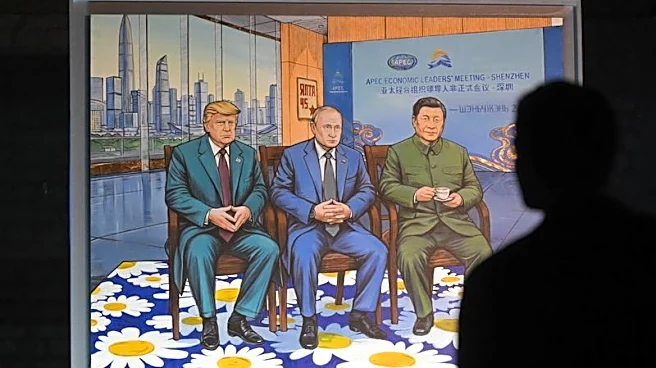
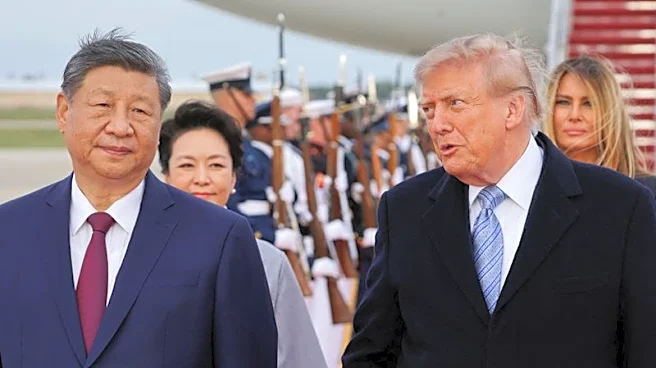
A historic three-way summit involving President Donald Trump, Chinese President Xi Jinping, and Russian President Vladimir Putin is scheduled to take place on November 19th in Shenzhen, China, on the sidelines of the Asia-Pacific Economic Cooperation
(APEC) summit. This unprecedented meeting has sparked concerns among other nations about the potential for these three powers to reshape the international order without broader consultation. Japanese Prime Minister Sanae Takaichi is also attending the APEC summit, having arrived in Manila for ASEAN meetings before traveling to China. Security measures have been heightened in Shenzhen in anticipation of the high-profile gathering. The meeting draws comparisons to the 1945 Yalta Conference, where major powers discussed the postwar international order.
Why It's Important?
This summit carries immense geopolitical significance, as it brings together the leaders of the world's three most powerful military and geopolitical players. The prospect of a 'second Yalta Conference' raises fears that Washington, Beijing, and Moscow could establish a new framework for international relations, potentially affecting the security and interests of numerous countries, particularly in Europe and Asia. For President Trump, the meeting offers an opportunity to demonstrate his influence and diplomatic effectiveness. President Xi stands to reinforce China's role as a central force in global diplomacy by hosting the event, while President Putin could project an image of Russia as an indispensable global power. The outcomes, or even the symbolism of the meeting, could have profound implications for global stability, trade, and security alliances, including the U.S.-Japan alliance.
What's Next?
The international community will be closely observing the summit for any concrete agreements or declarations that emerge. Even without formal outcomes, the mere act of the three leaders meeting could signal a shift in global power dynamics. Diplomatic observers are also paying attention to symbolic aspects, such as the arrangement for an official photograph, which can convey significant diplomatic messages. Japanese Prime Minister Takaichi's presence at APEC during this period highlights the delicate diplomatic challenges faced by allies of the U.S., who are keen to ensure their interests are not overlooked. The discussions at the summit could influence future multilateral engagements and bilateral relations between the participating nations and the rest of the world.
Beyond the Headlines
The historical parallel to the Yalta Conference evokes a sense of apprehension regarding the potential for major powers to make decisions that impact countries not represented at the table. This summit could trigger a re-evaluation of existing international alliances and diplomatic strategies. The motivations of each leader—President Trump seeking to demonstrate influence, President Xi aiming to bolster China's global standing, and President Putin striving to counter international isolation—suggest that the meeting itself, regardless of substantive agreements, could be viewed as a political achievement by each participant. This event underscores the ongoing shift towards a more multipolar world and the challenges it poses for traditional diplomatic frameworks and the balance of power.