
What's Happening?
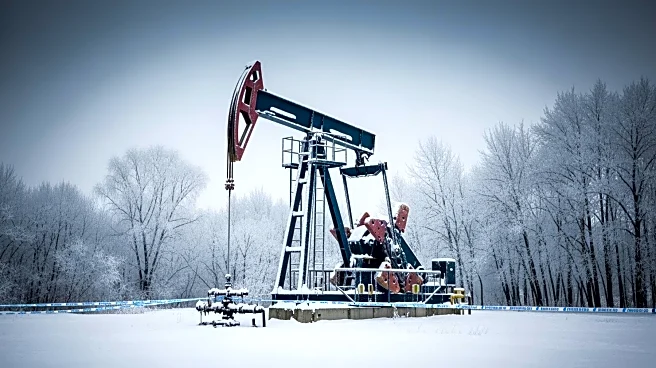
Winter storm Fern has significantly impacted U.S. oil and gas production, leading to a substantial reduction in output. Over the weekend, the storm caused a loss of up to 2 million barrels per day (bpd)
of oil production, which accounts for approximately 15% of the total U.S. oil output. The Permian Basin, a major oil-producing region, experienced production outages of around 1.5 million bpd. However, recovery efforts are underway, and the lost output in the Permian has decreased to about 700,000 bpd, with expectations of full restoration by the end of the month. The average monthly impact of the freeze for January is estimated to be around 390,000 bpd, primarily due to disruptions in the Permian. In addition to oil, natural gas production also suffered, with losses of up to 11% of U.S. output. The cold snap led to a dramatic increase in U.S. benchmark natural gas prices, which more than doubled in a week, marking the strongest rally since the 1990s.
Why It's Important?
The disruption caused by winter storm Fern highlights the vulnerability of the U.S. energy sector to extreme weather events. The significant reduction in oil and gas production can have far-reaching implications for the energy market, potentially leading to increased prices and supply shortages. The Permian Basin, being a major contributor to U.S. oil and gas output, plays a critical role in the nation's energy security. The storm's impact underscores the need for improved infrastructure and contingency planning to mitigate the effects of such weather-related disruptions. Additionally, the surge in natural gas prices could affect various industries reliant on this energy source, leading to increased operational costs and potential economic ripple effects.
What's Next?
As production recovery efforts continue, stakeholders in the energy sector will likely focus on assessing the damage and implementing measures to prevent future disruptions. Energy companies may invest in weather-resilient infrastructure and explore alternative energy sources to diversify their portfolios. Policymakers might also consider regulatory changes to enhance the resilience of the energy grid. The situation could prompt discussions on the balance between fossil fuel reliance and the transition to renewable energy sources, as the industry seeks to adapt to changing environmental conditions.