







What's Happening?
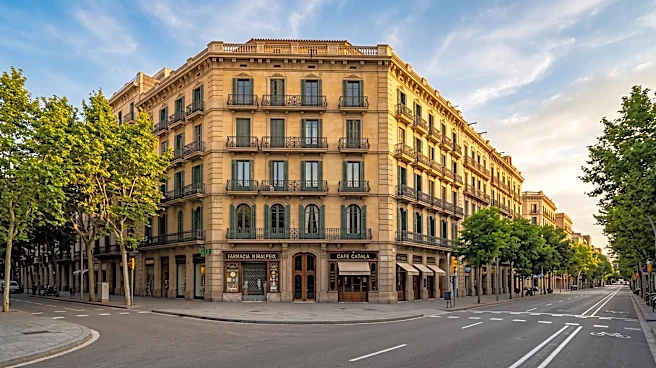
Barcelona has announced plans to ban all short-term holiday rentals by 2028. This decision comes as anti-tourism protests escalate across various Spanish regions, including Mallorca, Málaga, and the Canary Islands. Residents are voicing grievances over
a severe housing crisis, rising living costs, and environmental strain, which they attribute to mass tourism. Activists have engaged in various protest tactics, such as targeting outdoor diners with water pistols and organizing blockades of hotels. In response to these growing concerns, the Spanish national government has also introduced new licensing requirements for major rental platforms like Airbnb and Booking.com. Additionally, tourist taxes have been increased or implemented in areas such as Tenerife and Ibiza, reflecting a broader governmental effort to manage the impact of tourism.
Why It's Important?
This move by Barcelona is significant as it directly addresses the socio-economic and environmental impacts of unchecked tourism, a model that has been a cornerstone of Spain's economy. Tourism accounts for approximately 12% of Spain’s GDP and up to one-third of the economy in the Canary Islands. The ban on short-term rentals aims to alleviate the housing crisis by returning properties to residential use, potentially making housing more affordable for local residents. However, this policy could have substantial economic repercussions for the tourism sector, particularly for property owners who rely on rental income and for businesses that cater to tourists. Local business associations have already expressed concerns that sustained protests and stricter regulations could deter British travelers, who represent the largest source of international visitors to Spain. The situation highlights a growing tension between economic benefits derived from tourism and the quality of life for local populations, setting a precedent for other popular tourist destinations grappling with similar issues.
What's Next?
The ban on short-term holiday rentals in Barcelona is set to be fully implemented by 2028. In the interim, the national government's new licensing requirements for rental platforms will likely come into effect, requiring platforms like Airbnb and Booking.com to comply with stricter regulations. It is anticipated that other Spanish regions experiencing similar anti-tourism sentiments may consider adopting comparable measures to manage tourist influx and its associated challenges. The tourism industry, including hotel operators and travel agencies, will need to adapt to these evolving regulatory landscapes. There may be continued dialogue and potential negotiations between local authorities, tourism stakeholders, and resident groups to find a balance between economic prosperity and community well-being. The effectiveness of these measures in addressing the housing crisis and mitigating environmental strain will be closely monitored, potentially influencing future policy decisions in other global tourist hotspots.
Beyond the Headlines
The decision by Barcelona to ban short-term holiday rentals reflects a deeper societal shift in how major tourist cities are re-evaluating their relationship with mass tourism. This move goes beyond mere regulation; it signifies a reassertion of local control over urban spaces and a prioritization of residents' needs over unchecked economic growth from tourism. Ethically, it raises questions about the right to housing versus the right to profit from property, and the sustainability of current tourism models. Culturally, it could lead to a transformation of Barcelona's urban fabric, potentially fostering a more resident-centric environment and preserving local culture that might otherwise be diluted by transient populations. This development could also inspire other global cities facing similar pressures to consider more radical interventions, potentially leading to a broader redefinition of sustainable urban tourism and a global trend towards stricter controls on short-term rental markets.