



What's Happening?
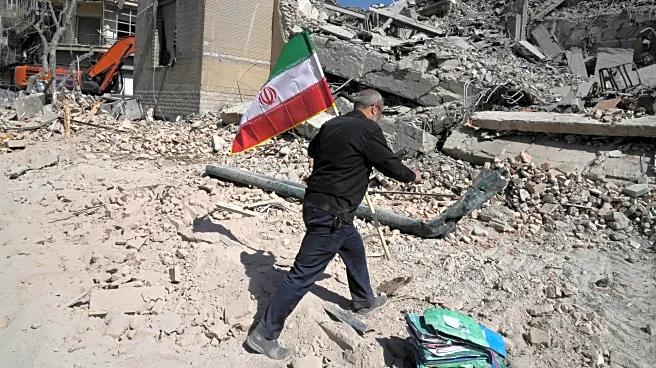
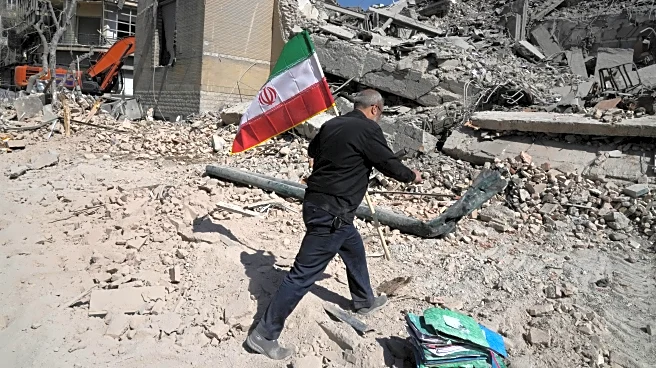
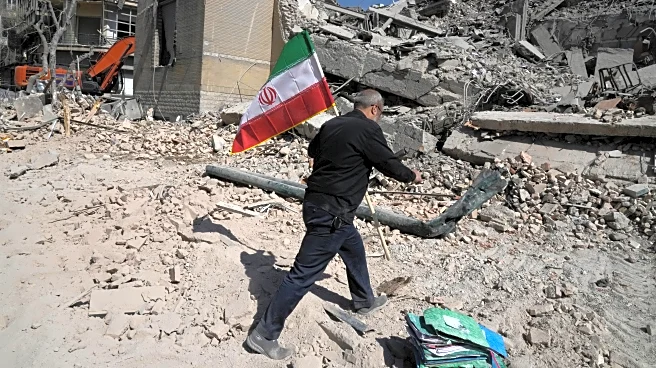
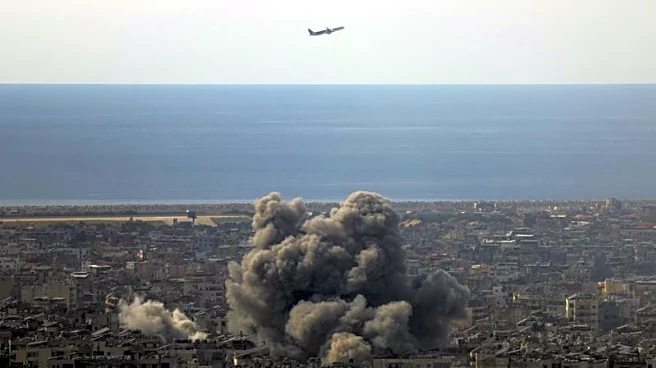
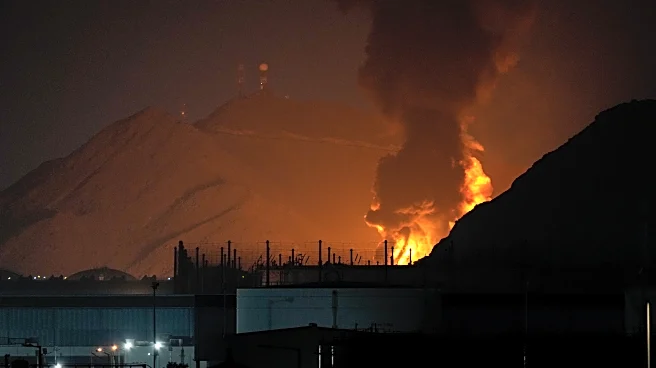
The Strait of Hormuz, a critical chokepoint for global oil trade, has been closed by Iran's Revolutionary Guard following U.S. and Israeli airstrikes. This closure has halted tanker traffic, paralyzing 20% of the global oil supply and disrupting the traditional
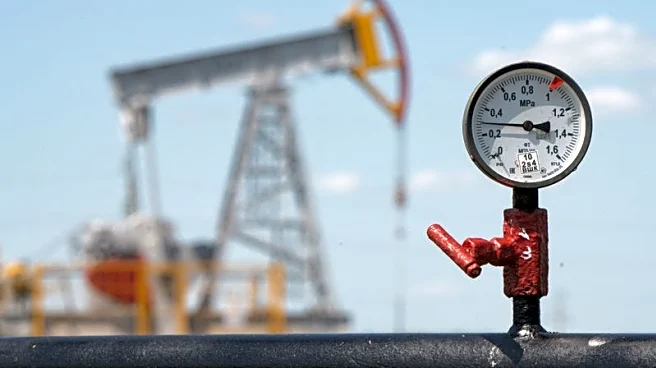
energy order. The blockade has forced the industry to consider alternative routes, such as Saudi Arabia's East-West pipeline and the UAE's Habshan-Fujairah line, which are not equipped to handle the increased demand. The situation has led to a spike in oil prices, testing the $90-per-barrel threshold, which poses a significant threat to the global economy. The closure has also resulted in increased insurance costs for tankers, making it economically unfeasible for them to enter conflict zones.
Why It's Important?
The closure of the Strait of Hormuz has significant implications for the global economy, particularly for countries reliant on oil imports like India, the EU, and East Asia. The disruption threatens to trigger massive inflation and hinder economic growth by preventing interest rate cuts. The increased cost of oil and insurance premiums could lead to financial losses for tanker operators and exacerbate the global energy crisis. The situation highlights the fragility of the current energy infrastructure and the need for new logistical solutions to ensure energy security. The geopolitical tensions and the resulting economic impact underscore the urgency for strategic alliances and technological advancements to navigate the evolving global landscape.
What's Next?
The industry must explore alternative routes and solutions to bypass the Hormuz blockade. However, the existing infrastructure is not designed to handle the increased capacity, posing risks of mechanical failure and environmental disasters. The global energy market may need to invest in new technologies and infrastructure to mitigate the impact of such disruptions. Policymakers and industry leaders will likely focus on developing strategies to enhance energy security and reduce reliance on vulnerable chokepoints. The situation may also prompt discussions on international cooperation and the need for a more resilient global energy system.
Beyond the Headlines
The closure of the Strait of Hormuz highlights the limitations of the current energy model, which relies heavily on geographic control and traditional infrastructure. The crisis underscores the need for innovation and diversification in energy sources and transportation methods. The geopolitical tensions and economic repercussions may lead to a reevaluation of energy policies and a shift towards more sustainable and secure energy solutions. The situation also raises ethical and environmental concerns, as the increased risk of mechanical failures and environmental disasters could have long-term consequences for the global ecosystem.