
What's Happening?
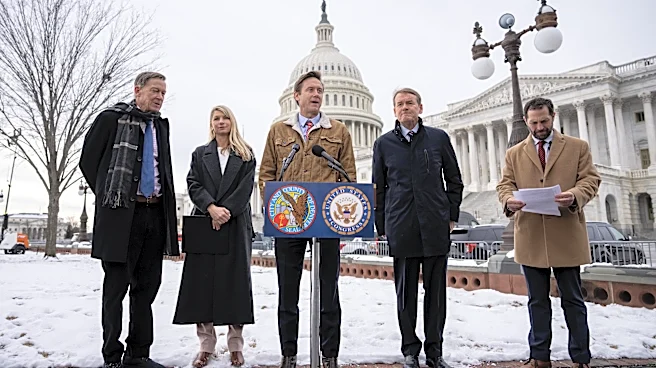
House Science, Space, and Technology Committee Chairman Brian Babin (R-Texas-36) has expressed his approval of the Senate's unanimous passage of the bipartisan Weather Research and Forecasting Innovation
Reauthorization Act of 2026 (Weather Act). According to a Texas Insider report, Chairman Babin emphasized the critical need for reliable weather forecasts and timely warnings to safeguard American lives and property. He cited last year's severe floods in Texas as a stark reminder of the necessity to enhance severe weather prediction and communication of vital information to affected communities. The Weather Act Reauthorization aims to modernize the nation's forecasting capabilities and bolster emergency preparedness. This legislation builds upon a bill previously advanced by the House Science, Space, and Technology Committee and represents a bipartisan, bicameral agreement to protect American communities from severe weather events.
Why It's Important?
The unanimous Senate passage of the Weather Act Reauthorization signifies a significant step towards improving national weather forecasting and emergency response. This legislation is crucial for protecting lives and property across the U.S., particularly in regions prone to severe weather events like Texas, which experienced devastating floods in 2025. Enhanced forecasting capabilities and modernized warning systems will provide communities and first responders with more time to prepare and act, potentially reducing casualties and property damage. The bipartisan nature of the bill underscores a shared commitment among lawmakers to address the growing challenges posed by increasingly dangerous and costly weather disasters. This initiative will benefit a wide range of stakeholders, including residents, emergency services, and local economies, by mitigating the impact of natural catastrophes.
What's Next?
Following the Senate's unanimous passage, the Weather Act Reauthorization is anticipated to be taken up by the House of Representatives. If passed by the House, the bill will then proceed to the President's desk for signature before the end of the 119th Congress. The legislation is expected to reauthorize multiple weather forecasting programs, advance next-generation forecasting technologies, and improve research-to-operations transition efforts. It will also focus on enhancing public communication of weather risks, including through NOAA weather radio, and modernizing NOAA’s aging radar network. These steps are designed to ensure that the National Oceanic and Atmospheric Administration (NOAA) has the necessary support, tools, staffing, and infrastructure to help communities prepare for and respond to disasters effectively.
Beyond the Headlines
The Weather Act Reauthorization extends beyond immediate disaster preparedness, addressing long-term implications of climate patterns. House Science, Space, and Technology Committee Ranking Member Zoe Lofgren (D-Calif.-18) highlighted the World Meteorological Organization's State of the Climate update, which predicts record heat, flooding, and drought conditions due to a 'supersized El Niño.' This context underscores the urgency and foresight embedded in the Weather Act, aiming to bolster national forecasting capabilities to protect not only lives and property but also the economy and national security against evolving climate challenges. The legislation's focus on improving long-range weather forecasting will support critical sectors like agriculture and water management, demonstrating a proactive approach to environmental shifts.