
What's Happening?
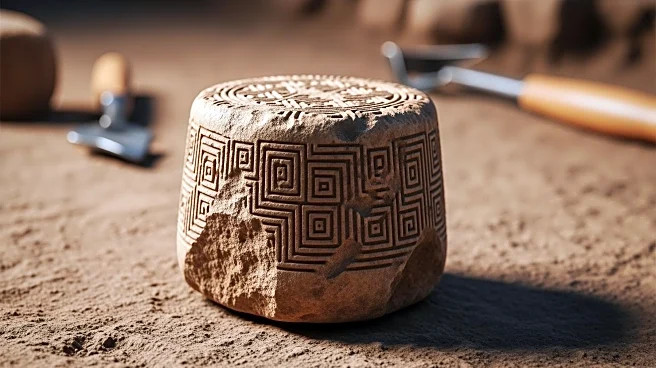
A stone seal believed to have been used by a high-ranking administrative official during the time of the Kingdom of Judah in the late 8th century BC was discovered by the Israel Antiquities Authority (IAA)
during excavations in northern Israel. The seal, made of a light brown gemstone, features carvings of four pomegranates and an ancient Hebrew inscription reading: 'Belonging to Makhach (son of) Amihai.' This discovery was made during the construction of the Ein Tut Interchange and is significant due to its origin from an organized archaeological excavation rather than antiquities collectors.
Why It's Important?
The discovery of the stone seal provides valuable insights into the administrative practices and cultural heritage of the biblical Kingdom of Judah. It contributes to the understanding of historical governance and societal structures during the First Temple period. The seal's inscription adds to the treasury of biblical names, offering a glimpse into the identities and roles of individuals in ancient Judah. This find may enhance historical narratives and archaeological research, potentially influencing future excavations and studies in the region.