








What's Happening?
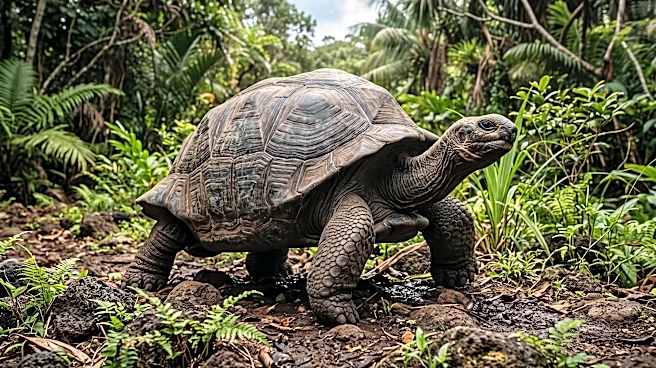
Scientists have analyzed the genome of Jonathan, an Aldabra giant tortoise believed to be 194 years old, to understand his exceptional longevity. Jonathan, the oldest known living land animal, has significantly outlived the average lifespan of his species,
which is around 80 years. Researchers, including physician-scientist Stephen Clark of the Kallel Foundation and UCLA epigeneticist Steve Horvath, obtained DNA from cheek swabs and saliva samples. Their analysis, published in Science Advances, focused on positively selected genes and epigenetic markers. They discovered that Jonathan shares several genes with another long-lived tortoise, Lonesome George, including LAMTOR4 and VCP, which are linked to human longevity, cell protection, and DNA repair. Jonathan also possesses multiple copies of PRF1, a gene associated with boosting the immune system against cancer and degrading cells. While Jonathan's epigenome showed expected signs of entropy for his age, key gene promoters controlling mitochondrial function, RNA processing, and DNA repair appeared remarkably young, similar to those of a 5-year-old juvenile tortoise.
Why It's Important?
The findings from Jonathan's genome offer crucial insights into the biological mechanisms of extreme longevity, which could have significant implications for human health and anti-aging research. The identification of genes like LAMTOR4, VCP, and PRF1, known to play roles in human longevity, cell maintenance, and immune function, suggests potential targets for developing treatments for age-related conditions. The observation that specific gene promoters in Jonathan's epigenome maintain a 'young' state despite his advanced chronological age is particularly noteworthy. This 'low-entropy state' in critical pathways related to mitochondrial function, RNA processing, and DNA repair could be a key factor in protecting against age-related decline. Understanding how these mechanisms operate in an exceptionally long-lived animal like Jonathan could lead to novel therapeutic strategies aimed at extending healthy human lifespan and mitigating the effects of aging-related diseases.
What's Next?
Future research will likely delve deeper into the specific functions of the identified longevity-associated genes and epigenetic mechanisms in Jonathan. Scientists may explore how these genes interact and contribute to the tortoise's remarkable resilience against aging. The insights gained could inform further studies on human longevity, potentially leading to the development of new pharmaceutical interventions or lifestyle recommendations. The research team may also investigate whether similar epigenetic patterns are present in other long-lived species or human populations with exceptional lifespans. The goal would be to translate these findings into practical applications for improving human health and extending the period of healthy living, potentially through targeted therapies that mimic the protective effects observed in Jonathan's epigenome.
Beyond the Headlines
The study of Jonathan's longevity transcends basic biological understanding, touching upon broader ethical and societal considerations regarding human lifespan extension. If the mechanisms of extreme longevity can be successfully translated to humans, it raises questions about the societal impact of a significantly longer average lifespan, including implications for healthcare systems, retirement ages, and resource allocation. The research also highlights the importance of studying diverse species to uncover fundamental biological principles that may not be apparent in traditional model organisms. Jonathan's case underscores the potential for nature to provide blueprints for overcoming biological limitations, pushing the boundaries of what is considered possible in terms of lifespan and health. This research could spark a renewed focus on comparative genomics and epigenomics across the tree of life to unlock more secrets of aging.