
What's Happening?
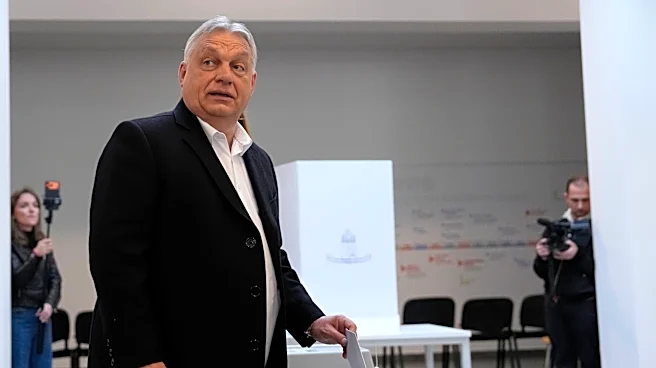
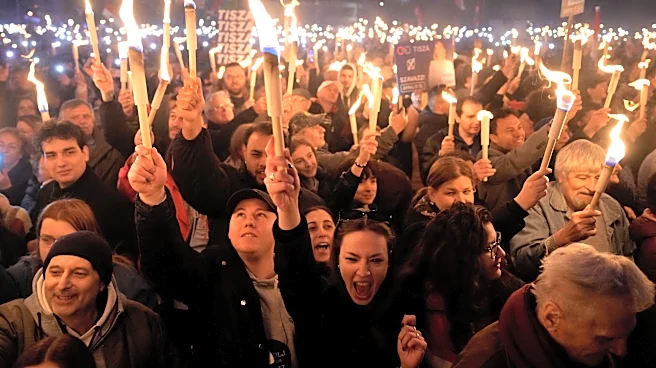
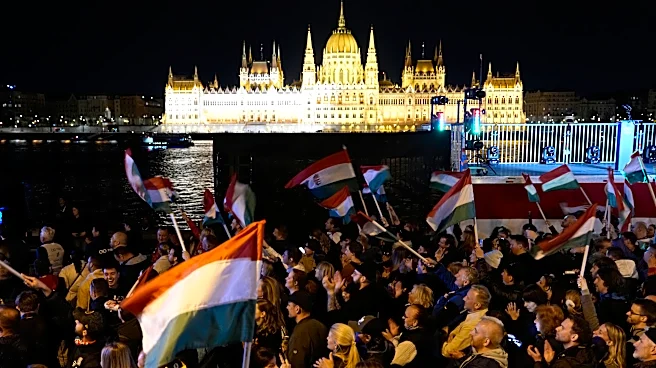
Peter Magyar has ended Viktor Orban's 16-year rule as Hungary's Prime Minister in a historic election. Magyar's Tisza party, which is center-right and pro-European Union, won a two-thirds majority in the
Hungarian parliament. This election saw a record-high turnout and is expected to have significant implications for Hungary's political landscape and its relations with the EU and Russia. Magyar, who once admired Orban, distanced himself from the ruling party, accusing it of corruption. His victory is seen as a shift towards rebuilding Hungary's Western orientation and reducing its dependence on Russian energy.
Why It's Important?
Magyar's victory represents a significant political shift in Hungary, potentially altering its trajectory within the EU and its foreign relations. Orban's defeat could weaken the populist far-right movement in Europe, as he was a prominent figure advocating for 'illiberal democracy.' Magyar's policies aim to restore democratic standards and unlock EU funds, which could revitalize Hungary's economy. This change in leadership may also ease tensions between Hungary and the EU, particularly concerning democratic standards and migration policies. The election outcome is closely watched by international stakeholders, including the U.S., due to its potential impact on European stability.