







What's Happening?
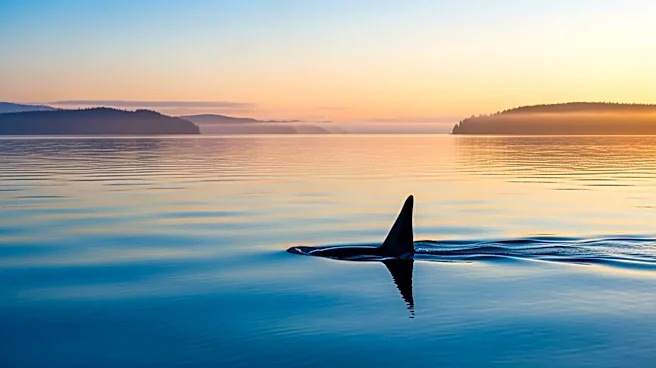
A pod of three orcas, previously unrecorded in the Seattle area, has captivated whale watchers with their recent appearances near downtown Seattle. These orcas, identified as T419, T420, and T421, have been seen cruising various shorelines in the region,
including a notable visit to Vancouver, British Columbia, in March. Researchers, who maintain detailed records of killer whales in the Salish Sea, were surprised by the pod's presence, as they were not listed in local whale catalogs. The pod, consisting of an adult female and her two offspring, was previously photographed in Alaskan waters, suggesting a possible origin from the Aleutian region. The orcas bear circular scars from cookiecutter sharks, indicating time spent in the open ocean.
Why It's Important?
The unexpected visit of these orcas to Seattle highlights the dynamic nature of marine wildlife patterns and the potential for new ecological interactions in the region. The presence of these transient orcas, which feed on sea mammals, contrasts with the local salmon-eating resident orcas, offering a unique opportunity for researchers to study different feeding behaviors and ecological impacts. This event also underscores the importance of marine conservation efforts and the need for continued monitoring of whale populations to understand their movements and health. For the public, the orcas' visit provides a rare and exciting opportunity to witness these majestic creatures up close, fostering greater interest and support for marine conservation initiatives.
What's Next?
Researchers will likely continue to monitor the movements of this orca pod to gather more data on their origin and behavior. The pod's presence in the Salish Sea could lead to further studies on the interactions between transient and resident orca populations, as well as the impact on local marine ecosystems. Additionally, the public's interest in these orcas may drive increased tourism and educational opportunities related to marine wildlife in the Seattle area. Conservation groups may use this event to advocate for stronger protections for marine habitats and to raise awareness about the challenges facing orca populations.