

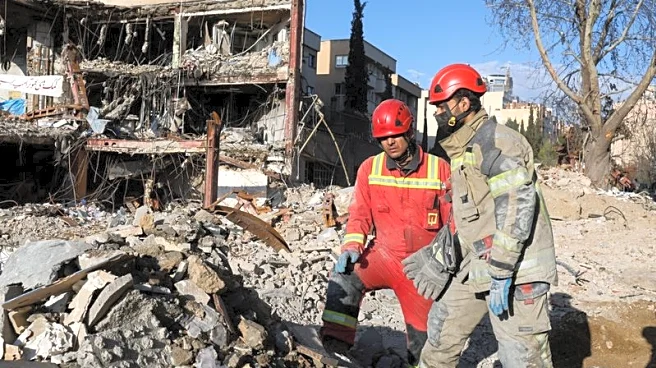


What's Happening?
Treasury Secretary Scott Bessent stated that 'sometimes you have to escalate to de-escalate' in the context of the ongoing war in Iran. This perspective comes amid calls from Democratic Senator Murphy and others in Congress to end the conflict. The U.S.
has been involved in military actions in Iran, which have sparked debates over the effectiveness and consequences of such strategies. Bessent's comments reflect a belief in using increased military pressure as a means to achieve a strategic advantage or resolution.
Why It's Important?
Bessent's remarks highlight a contentious approach to foreign policy that prioritizes military escalation as a tool for conflict resolution. This strategy can have significant implications for U.S. relations with international allies and adversaries, potentially leading to further instability in the Middle East. The approach also raises questions about the long-term impacts on U.S. military resources and the potential for unintended consequences, such as increased regional tensions or retaliatory actions.
What's Next?
The U.S. administration may continue to face pressure from Congress and international partners to pursue diplomatic solutions rather than military escalation. The situation in Iran remains volatile, with potential for further military engagements or negotiations. The administration's decisions will likely influence U.S. foreign policy and military strategy in the region, as well as domestic political dynamics.