


What's Happening?
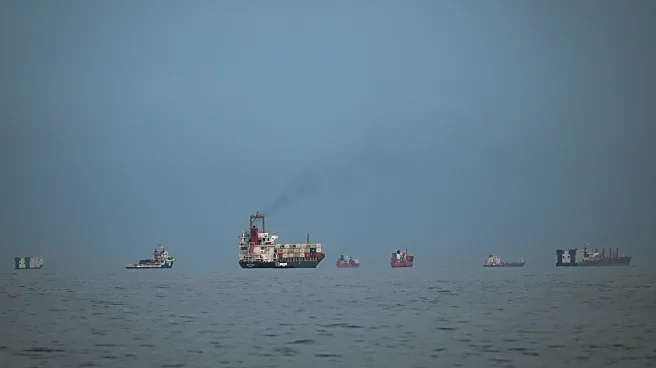
Iran is developing a new vetting and registration system for ships transiting the Strait of Hormuz, transitioning to a 'selective' blockade of the strategic waterway. This move comes as traffic through the Strait has plunged 95% since the United States
and Israel launched a war on Iran, significantly impacting global energy markets. The new system, managed by Iran's Islamic Revolutionary Guard Corps (IRGC), requires ships to communicate extensive details regarding ownership and cargo destination to gain approval for transit. Countries like India, Pakistan, Iraq, Malaysia, and China are in talks with Tehran to navigate this new system.
Why It's Important?
The Strait of Hormuz is a vital passage for global oil supplies, and disruptions here can lead to significant economic repercussions worldwide. Iran's selective blockade and vetting system could further strain international relations and exacerbate tensions in the region. The development of this system indicates Iran's strategic approach to control maritime traffic and assert its influence over the Strait, potentially leading to increased geopolitical instability and affecting global energy prices.
What's Next?
As Iran implements its vetting system, international stakeholders will likely continue negotiations to ensure safe passage through the Strait. Shipping companies may face increased costs and risks, prompting them to reassess their routes and strategies. The situation may lead to further diplomatic efforts to resolve the conflict and stabilize the region, but the outcome remains uncertain as tensions persist.