
What's Happening?
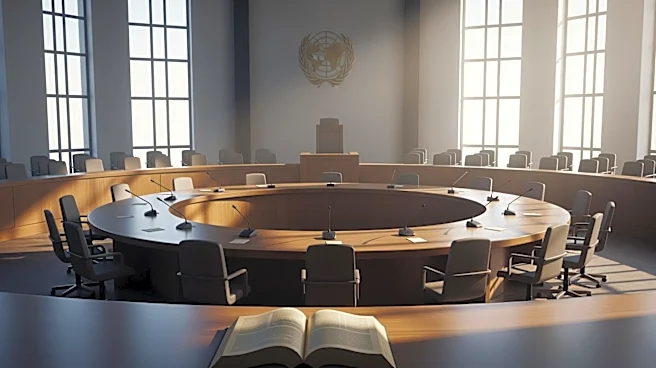
A legal expert from Stanford's Program in International and Comparative Law, Allen Weiner, has discussed an open letter that claims the ongoing war with Iran violates the United Nations Charter. The letter, which has garnered attention, argues that the military
actions against Iran lack the necessary legal justification under international law. This discussion was facilitated by NPR's Ayesha Rascoe, who explored the implications of such a violation. The U.N. Charter, established to maintain international peace and security, requires member states to refrain from the threat or use of force against the territorial integrity or political independence of any state. The open letter suggests that the current military engagement with Iran does not meet these criteria, raising questions about the legality of the actions taken by the involved nations.
Why It's Important?
The assertion that the war with Iran violates the U.N. Charter has significant implications for international relations and U.S. foreign policy. If the claims in the open letter are substantiated, it could lead to increased scrutiny and criticism of the U.S. and its allies' military strategies. This situation may affect diplomatic relations and could potentially lead to calls for accountability or changes in policy. The U.N. Charter serves as a foundational document for international law, and any perceived violations could undermine its authority and the global order it seeks to maintain. Furthermore, this issue may influence public opinion and political discourse within the U.S., as citizens and lawmakers debate the ethical and legal dimensions of military interventions.
What's Next?
The discussion around the legality of the Iran war is likely to continue, with potential responses from international bodies, legal experts, and political leaders. There may be calls for further investigation or debate within the United Nations to address the concerns raised in the open letter. Additionally, the U.S. government and its allies might need to provide justifications or reassess their strategies to align with international law. This situation could also prompt broader discussions about the role of international law in governing military actions and the mechanisms available to enforce compliance.