


What's Happening?
David Mendoza Ayala, a 30-year-old man from Tri-Cities, Washington, has been found guilty on a federal charge of possession with intent to distribute 400 grams or more of fentanyl. This conviction follows an extensive investigation by the Drug Enforcement
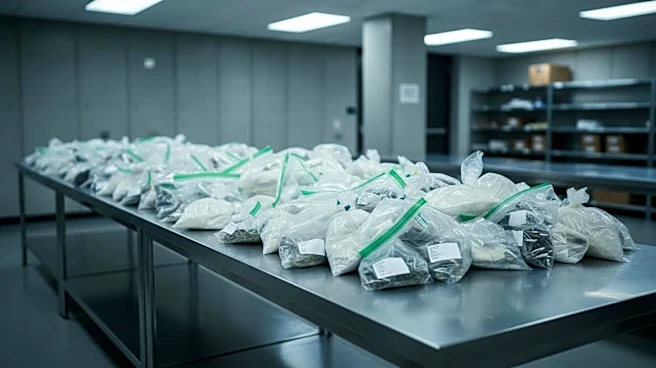
Administration (DEA) and the Tri-Cities Metro Drug Task Force, which led to the seizure of over 50,000 fentanyl pills, significant quantities of methamphetamine and cocaine, approximately $10,000 in suspected drug money, and more than a dozen firearms, including AR-style rifles. Investigators also confiscated 13 vehicles linked to Mendoza Ayala's drug trafficking operation. Evidence presented during the trial revealed that two young children were present in Mendoza Ayala's apartment during the search, with fentanyl-laced pills scattered within their reach, a situation described by Special Agent Robert A. Saccone as demonstrating 'a complete disregard for human life.'
Why It's Important?
This conviction is a significant victory in the ongoing fight against the fentanyl crisis in the United States, particularly in the Pacific Northwest. The seizure of such a large quantity of fentanyl pills, along with other illicit drugs and firearms, disrupts a major drug trafficking network and potentially saves countless lives from overdose. The presence of children in an environment with scattered fentanyl highlights the severe public health and safety risks associated with drug trafficking, underscoring the broader societal impact of these criminal activities. This case also demonstrates the effectiveness of inter-agency cooperation between federal and local law enforcement in combating complex drug operations, reinforcing the importance of sustained efforts to dismantle these networks.
What's Next?
David Mendoza Ayala faces a mandatory minimum sentence of 10 years in prison, with a potential maximum of life imprisonment, followed by at least five years of supervised release. The sentencing will determine the exact duration of his incarceration and post-release supervision. This case may also lead to further investigations into his network and associates, potentially uncovering more individuals involved in drug trafficking. The focus on the presence of children in the drug-laden apartment could also prompt discussions and actions regarding child protection in homes where drug activities are suspected, potentially influencing social services and law enforcement protocols in such situations.
Beyond the Headlines
The conviction of David Mendoza Ayala underscores the pervasive and devastating impact of the fentanyl crisis on American communities. Beyond the immediate legal consequences for the individual, this case brings to light the intricate challenges law enforcement faces in combating sophisticated drug operations. The detail about fentanyl pills being within reach of children in the apartment adds a harrowing dimension, highlighting the extreme dangers posed to vulnerable populations. This incident serves as a stark reminder of the urgent need for comprehensive strategies that combine law enforcement efforts with public health initiatives, educational campaigns, and support systems for families affected by drug abuse and trafficking. It also raises ethical questions about the responsibility of individuals involved in such dangerous activities, particularly when children are exposed.