






What's Happening?
In a speculative political quiz regarding the 2026 midterm elections, Rep. Hakeem Jeffries (D-N.Y.) is identified as a potential 'biggest winner' of the midterms, with the possibility of becoming the first African-American to be elected as Speaker of the U.S.
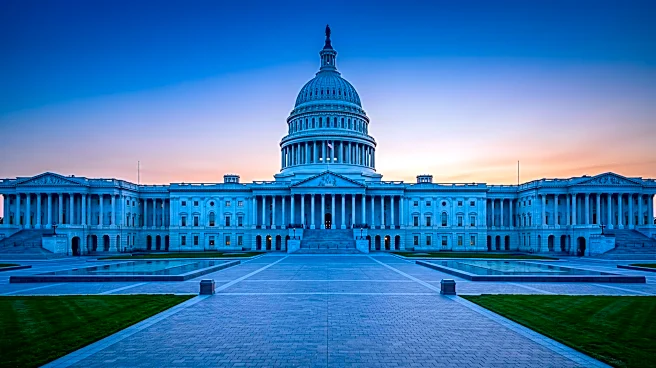
House of Representatives. This projection is based on a scenario where Democrats win control of the House while Republicans retain control of the Senate. The quiz, designed to predict future political events, positions Jeffries as a significant figure in the Democratic Party's future leadership. The context of the quiz also touches upon broader political landscapes, including the influence of President Trump, the ongoing Israeli-Palestinian conflict, and the rise of certain political ideologies within both major parties.
Why It's Important?
The potential elevation of Rep. Hakeem Jeffries to Speaker of the House would be a historic moment, marking the first time an African-American has held the position. This would signify a significant shift in leadership within the Democratic Party and could influence the party's agenda and priorities. As Speaker, Jeffries would play a crucial role in shaping legislative efforts, guiding the House's response to national and international issues, and potentially setting the tone for future political discourse. His leadership could also inspire greater representation in politics and reflect evolving demographics within the U.S. political landscape. The scenario also highlights the ongoing struggle for control of Congress, with the outcome of the 2026 midterms having profound implications for the balance of power in Washington.
What's Next?
The scenario presented is a prediction for the 2026 midterm elections, meaning the actual outcome is still two years away. The political landscape leading up to these elections will be shaped by various factors, including current events, public opinion, and the performance of both the Democratic and Republican parties. Should the predicted outcome of Democrats winning the House and Republicans retaining the Senate materialize, the process of electing a Speaker would commence. Rep. Jeffries, as the current House Democratic Leader, would be a strong contender for the role. His ability to unify the Democratic caucus and garner sufficient votes would be critical. The period leading up to the midterms will likely see increased campaigning, policy debates, and strategic positioning by both parties.
Beyond the Headlines
The hypothetical rise of Rep. Hakeem Jeffries to Speaker of the House carries deeper implications for American politics and society. Beyond the historical significance of being the first African-American Speaker, his leadership could symbolize a continued evolution of the Democratic Party's identity and priorities. It could also influence the party's approach to issues of racial justice, economic inequality, and social policy. Furthermore, the scenario of a divided Congress, with Democrats controlling the House and Republicans the Senate, suggests a period of potential legislative gridlock and increased partisan maneuvering. This could necessitate greater emphasis on bipartisan cooperation or, conversely, lead to heightened political polarization, impacting the effectiveness of governance and the ability to address pressing national challenges.