







What's Happening?
An unknown chemical emission in La Habra, Orange County, prompted evacuations on Tuesday, according to the La Habra Police Department. The incident occurred at approximately 11:54 a.m. at 503 South Cypress Street, an address associated with Shepard Bros.,
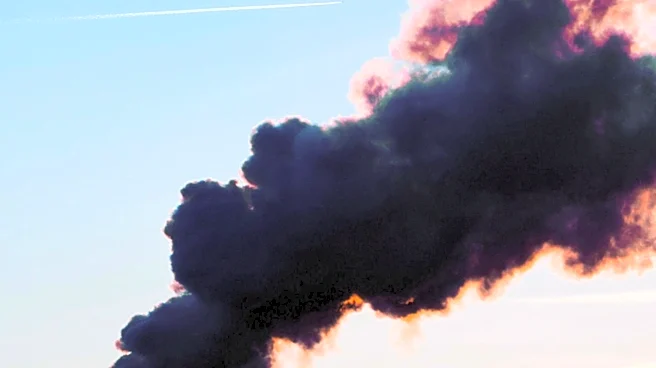
a company described as a 'compliance consultant and sanitation advisor.' Emergency crews from the La Habra Police Department (LHPD) and Los Angeles County Fire Department (LACFD) arrived to find an orange-yellow smoke plume emanating from the building's roof. A one-mile radius was established for evacuations, leading to the blocking off of areas west of Euclid Street to Harbor Boulevard, and Cypress Street between La Habra Boulevard and Lambert Road. The leak was subsequently mitigated, causing the plume to dissipate. While the specific chemicals involved have not been identified, investigators suspect the orange-yellow plume resulted from a chemical inside the plant mixing with alcohol. Active air monitoring is currently in place, and authorities have stated there is no longer an active risk to residents. Evacuations were lifted by 2:30 p.m.
Why It's Important?
This incident underscores the ongoing risks associated with industrial chemical handling and storage within populated areas. The rapid response and evacuation protocols highlight the critical importance of emergency preparedness and coordination between local law enforcement and fire departments in mitigating potential public health and safety threats. The involvement of a company specializing in 'compliance consulting and sanitation advising' raises questions about the efficacy of existing safety measures and regulatory oversight in facilities that handle hazardous materials. Such events can lead to significant disruptions for residents, including temporary displacement and concerns about air quality. For businesses, chemical leaks can result in operational shutdowns, investigations, and potential legal and financial repercussions, emphasizing the need for stringent safety protocols and regular inspections to prevent accidental releases and protect both workers and the surrounding community.
What's Next?
Authorities will continue their investigation to definitively identify the chemical or chemicals involved in the emission and determine the exact cause of the leak. This will likely involve forensic analysis of samples taken from the site and a thorough review of the facility's chemical inventory and operational procedures. Depending on the findings, regulatory agencies may issue citations, impose fines, or require the company to implement enhanced safety measures to prevent future incidents. The community will likely seek assurances regarding the long-term safety of the area and the potential health impacts, if any, from the exposure. Local officials will also review their emergency response protocols to identify any areas for improvement based on the experience of this incident, ensuring more efficient and effective responses to similar situations in the future.
Beyond the Headlines
The incident in La Habra brings to light the broader societal challenge of balancing industrial operations, which are often vital for the economy, with the imperative of public safety and environmental protection. The presence of facilities handling potentially hazardous chemicals in close proximity to residential areas necessitates robust regulatory frameworks, transparent communication with the public, and continuous monitoring. This event could spark renewed discussions about zoning laws, industrial safety standards, and the need for advanced early warning systems for chemical releases. It also highlights the psychological impact on communities, where even a contained incident can generate fear and distrust regarding industrial activities. The long-term implications could include increased scrutiny of industrial permits, calls for stricter enforcement of environmental regulations, and a push for greater corporate accountability in managing hazardous materials.