
What's Happening?
Florida's annual lovebug season is experiencing a significant reduction in insect populations due to the state's most severe drought in over two decades. Typically, lovebugs, scientifically known as Plecia
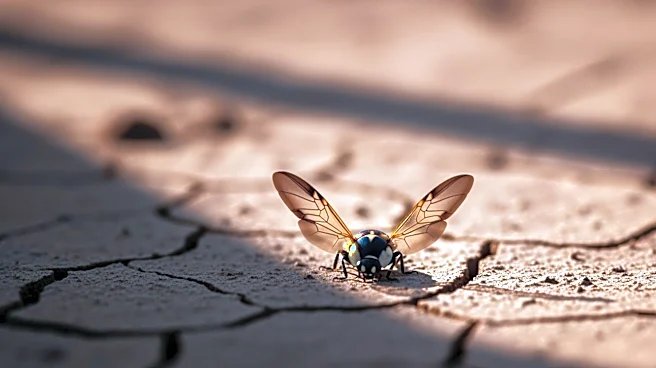
nearctica, emerge in large numbers during late spring and fall. However, this year, sightings have been notably fewer. Experts from the University of Florida attribute this decline to the dry conditions affecting the state. Lovebugs spend most of their lives underground in the larval stage, and their development is highly dependent on environmental factors such as temperature, humidity, and soil moisture. The current drought has slowed the decomposition of organic material, which is crucial for their development, leading to reduced populations. The drought is most extreme along the I-10 and I-75 corridors, with some areas experiencing desert-like conditions. In contrast, southern Florida has seen less severe drought conditions, allowing for more typical insect activity.
Why It's Important?
The reduction in lovebug populations has implications for both the environment and motorists. While lovebugs are primarily a nuisance pest, they do not bite, sting, or spread diseases. Their most significant impact is on vehicles, as their remains can damage paint and reduce windshield visibility if not cleaned promptly. The decrease in lovebug activity may temporarily alleviate these issues for drivers. However, the drought conditions that have led to this reduction are a cause for concern. Prolonged drought can have severe impacts on agriculture, water supply, and the overall ecosystem in Florida. The state's transition into the rainy season could potentially improve soil moisture levels, which may lead to a resurgence in lovebug populations and a return to more typical environmental conditions.
What's Next?
As Florida transitions into its rainy season, there is potential for improved soil moisture levels, which could create more favorable conditions for lovebugs later in the year. This change may lead to an increase in lovebug activity, particularly if rainfall becomes more widespread and consistent. Motorists may need to prepare for the return of larger swarms, which could impact driving conditions. Additionally, the state's agricultural and environmental sectors will be closely monitoring the situation, as the drought's impact extends beyond lovebugs to other areas of concern. The coming weeks will be critical in determining whether the drought conditions will persist or if the rainy season will bring relief.