








What's Happening?
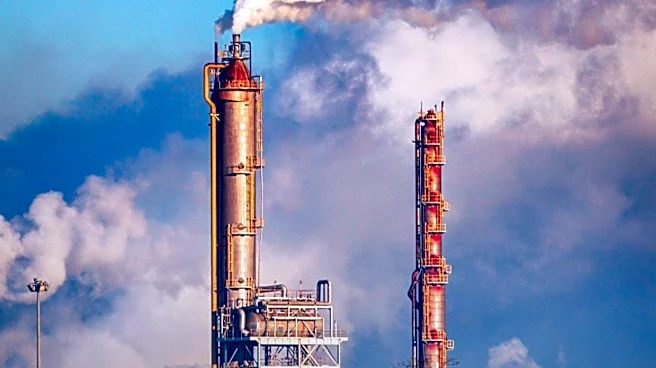
A plastic manufacturer in the north of England, Huntsman Polyurethanes, is under scrutiny for potential legal action due to emissions of benzene, a carcinogenic chemical. The Environment Agency (EA) is considering legal proceedings against the company
for a possible breach of its environmental license, which is a criminal offense. The company, part of the global Huntsman Corporation, replaced a process that reduced benzene emissions with a new method that has been intermittently paused, leading to increased emissions. The EA's records indicate that benzene emissions rose from 13 tonnes in 2022 to 17 tonnes in 2024. Benzene is known to cause leukemia, and there is no safe level of exposure according to the World Health Organization. Despite Huntsman's claims of compliance, the EA is contemplating further enforcement actions due to permit breaches.
Why It's Important?
The situation highlights significant health and environmental concerns associated with the plastics industry. Benzene emissions pose a serious risk to human health, particularly for communities living near production facilities. The potential legal action against Huntsman Polyurethanes underscores the need for stringent regulatory oversight to protect public health. This case also reflects broader issues within the global plastics industry, where hazardous chemicals used in production can have devastating impacts on both people and the environment. The outcome of this legal consideration could set a precedent for how similar cases are handled in the future, potentially leading to stricter regulations and enforcement actions against companies that fail to comply with environmental standards.
What's Next?
The Environment Agency is working with Huntsman to ensure rapid improvements at the site, and further enforcement actions are being considered. The agency has informed the UK Health Security Agency and the Health and Safety Executive to assess any public or occupational health risks. The case may prompt increased scrutiny and regulatory actions across the plastics industry, potentially leading to more rigorous environmental compliance requirements. Stakeholders, including environmental groups and local communities, are likely to continue advocating for stronger protections against industrial pollution.
Beyond the Headlines
This case sheds light on the ethical responsibilities of corporations in managing environmental impacts and the role of regulatory bodies in enforcing compliance. The slow response by the Environment Agency has been criticized, highlighting the need for more proactive measures to prevent environmental harm. The broader implications for the plastics industry include potential shifts towards more sustainable practices and increased public awareness of the health risks associated with chemical emissions. This could drive demand for cleaner production technologies and greater corporate accountability.