
What's Happening?
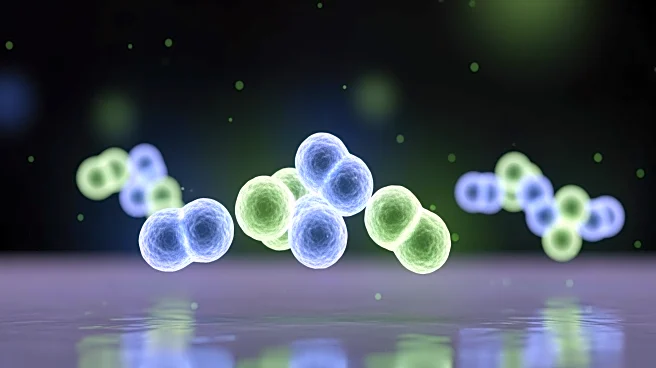
Researchers from Korea have discovered a significant link between oral bacteria and the development of Parkinson's disease. The study, conducted by a team led by Professor Ara Koh from POSTECH, found that
the bacterium Streptococcus mutans, commonly associated with tooth decay, can migrate from the mouth to the gut. Once in the gut, it produces an enzyme called urocanate reductase (UrdA) and a metabolic byproduct known as imidazole propionate (ImP). These substances were found in higher concentrations in the gut and bloodstream of Parkinson's patients. The research suggests that ImP can travel to the brain, contributing to the loss of dopamine-producing neurons, a hallmark of Parkinson's disease. The findings were published in Nature Communications and highlight the potential of targeting the gut microbiota as a therapeutic strategy for Parkinson's.
Why It's Important?
This research is crucial as it provides a new understanding of how Parkinson's disease may develop, emphasizing the role of the gut-brain axis. By identifying the specific bacteria and metabolites involved, the study opens up new avenues for treatment strategies that target the gut microbiome. This could lead to innovative therapies that prevent or slow the progression of Parkinson's by altering the gut's microbial composition. The findings also underscore the importance of oral hygiene, as maintaining a healthy mouth could potentially reduce the risk of developing neurological conditions like Parkinson's.
What's Next?
Future research will likely focus on developing treatments that can modify the gut microbiome to prevent the production of harmful metabolites like ImP. Clinical trials may be conducted to test the efficacy of such treatments in reducing Parkinson's symptoms or slowing disease progression. Additionally, further studies could explore the broader implications of the gut-brain connection in other neurodegenerative diseases, potentially leading to breakthroughs in understanding and treating these conditions.
Beyond the Headlines
The study highlights a growing interest in the gut-brain axis and its impact on neurological health. It raises ethical and medical questions about the potential for microbiome-based therapies and the need for personalized medicine approaches. As research progresses, it may challenge existing paradigms in neurology and lead to a reevaluation of how diseases like Parkinson's are diagnosed and treated.