
What's Happening?
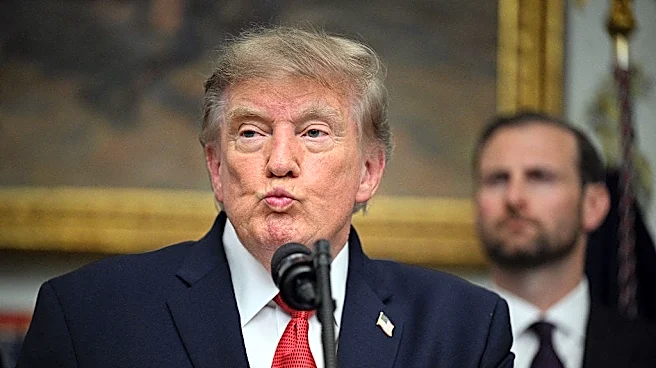
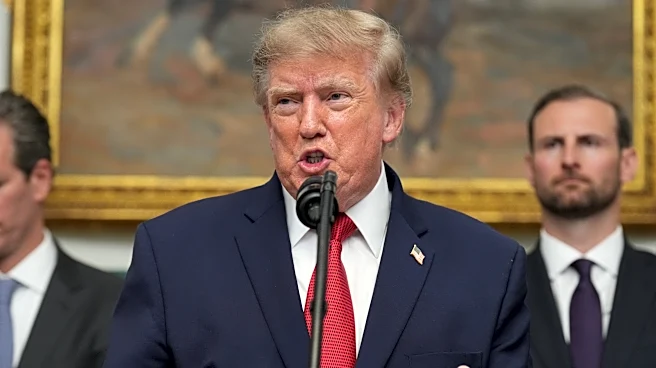
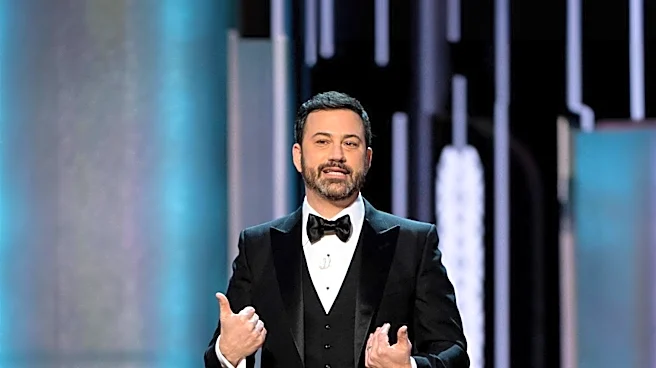
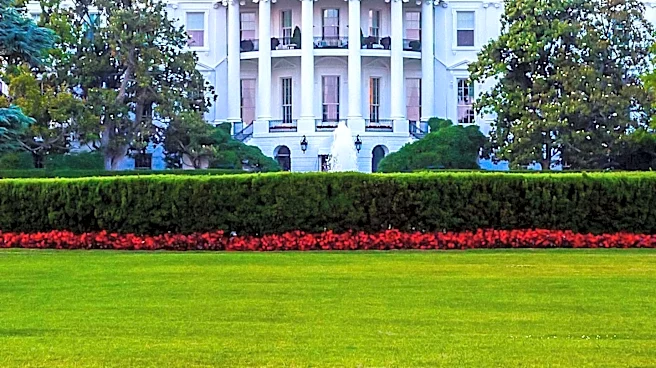
The White House has issued a strong rebuke against Rosie O'Donnell after her guest-hosting stint on 'Jimmy Kimmel Live,' during which she repeatedly criticized President Trump. In a statement to Entertainment Weekly, a White House spokesperson referred
to O'Donnell as 'a nasty woman and a total slob whose brain has been completely destroyed by Trump Derangement Syndrome.' O'Donnell's representative declined to comment on the White House's statement. Throughout her time filling in for Kimmel, O'Donnell made numerous jokes at President Trump's expense, including a revised version of the song 'Danny Boy' titled 'Donny Boy,' which mocked his policies, appearance, and poll numbers. She also stated that she had been living in Ireland for two years due to 'Mango Mussolini' and expressed support for Kimmel's use of the First Amendment.
Why It's Important?
This exchange highlights the ongoing and often acrimonious relationship between political figures and entertainment personalities in the U.S. The White House's direct and personal attack on a comedian, using highly charged language, underscores the deep polarization in American public discourse. It also demonstrates the administration's willingness to engage directly with critics from the entertainment industry, potentially setting a precedent for how political offices respond to satire and criticism. For the entertainment industry, such responses can either embolden or deter comedians and hosts from engaging in political commentary, influencing the landscape of late-night television and political satire. The use of terms like 'nasty woman' and 'Trump Derangement Syndrome' further entrenches existing political divides and can be seen as an attempt to delegitimize critical voices.
What's Next?
The immediate aftermath may see continued commentary from both sides, with O'Donnell potentially responding to the White House's statement, and other media figures weighing in on the nature of the exchange. This incident could fuel further discussions about the role of comedy in political commentary and the appropriate boundaries of official responses from government entities. It may also influence future booking decisions for late-night shows, as hosts and networks consider the potential for direct White House retaliation. The broader political climate suggests that such clashes are likely to continue, with both politicians and entertainers using their platforms to engage in public debate and criticism, further blurring the lines between politics and entertainment.
Beyond the Headlines
This event touches upon deeper implications regarding freedom of speech, the weaponization of language in political discourse, and the evolving relationship between government and media. The White House's characterization of O'Donnell's criticism as 'Trump Derangement Syndrome' reflects a broader strategy to dismiss opposition as irrational or emotionally driven, rather than substantively addressing the critiques. This tactic can erode civil discourse and make it more difficult for the public to discern legitimate criticism from partisan attacks. Furthermore, the incident raises questions about the decorum expected from official government communications and whether such personal attacks contribute to a healthy democratic dialogue. It also underscores the power of celebrity and media platforms in shaping public opinion and challenging political narratives.