

What's Happening?
A bipartisan group of U.S. lawmakers has introduced the Connected Vehicle Security Act, aiming to ban the import, sale, and use of vehicles and automotive technology from China and other countries deemed 'foreign adversaries' by the U.S. government. The
bill, co-sponsored by Representative Debbie Dingell and others, seeks to address potential security threats posed by Chinese connected cars, which could be used as mobile surveillance platforms. The legislation has passed the House Commerce Committee and awaits a full House vote. Proponents argue that Chinese vehicles benefit from state subsidies and industrial policies that undermine U.S. automotive manufacturing. However, some experts note that Chinese electric vehicles offer advanced technology and competitive pricing that U.S. consumers have yet to experience.
Why It's Important?
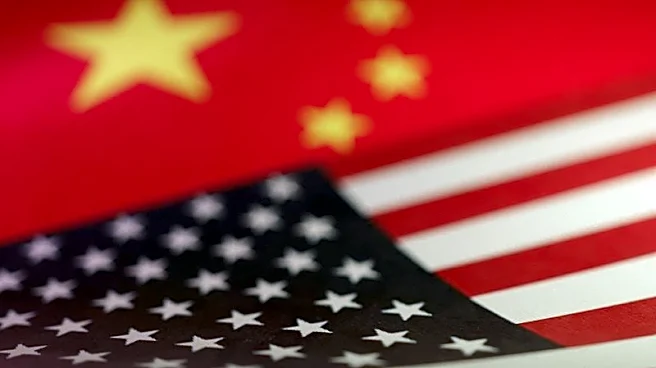
The proposed legislation highlights growing concerns over national security and economic competitiveness in the U.S. automotive industry. By targeting Chinese connected cars, the bill aims to protect U.S. manufacturers from unfair competition and potential espionage risks. The move reflects broader geopolitical tensions between the U.S. and China, particularly in technology and trade. If enacted, the ban could impact U.S. consumers by limiting access to affordable and technologically advanced vehicles. It also raises questions about the balance between national security and market competition, as well as the potential for retaliatory measures from China.
What's Next?
The bill's progression through Congress will be closely watched by stakeholders in the automotive and technology sectors. If passed, it could lead to further restrictions on Chinese technology in other industries. The U.S. government may also need to address potential supply chain disruptions and the need for domestic innovation to fill the gap left by restricted imports. Additionally, the legislation could prompt diplomatic negotiations between the U.S. and China to address mutual concerns over trade practices and security.
Beyond the Headlines
The debate over the Connected Vehicle Security Act underscores the complex interplay between national security and economic policy. It raises ethical questions about data privacy and the extent to which governments should intervene in market dynamics. The bill also highlights the challenges of regulating technology in a globalized economy, where supply chains and innovation are deeply interconnected. As the U.S. seeks to safeguard its industries, it must also consider the long-term implications for international relations and technological advancement.