








What's Happening?
Senator Lindsey Graham appeared on 'Face the Nation' to discuss the U.S. diplomatic strategy concerning Iran and the broader Middle East. Graham addressed a proposed $300 billion fund aimed at Iran, initially criticized as 'tone deaf' and likened to a 'Marshall
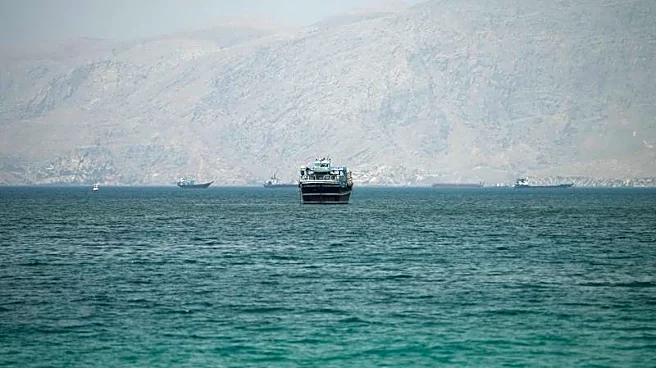
Plan for Germany with the Nazis still in charge.' He clarified his stance, stating support if the funding comes from Sunni Arab nations, indicating a potential shift in Iran's stance. Graham also discussed the potential consequences if diplomatic efforts fail, suggesting that President Trump might take control of the Strait of Hormuz and expand the Abraham Accords to include Saudi Arabia. He emphasized the importance of diplomacy over military action but warned of military responses if Iran continues aggressive actions.
Why It's Important?
The discussion highlights the complexities of U.S. foreign policy in the Middle East, particularly regarding Iran's nuclear ambitions and regional influence. Graham's comments underscore the potential for significant geopolitical shifts, such as the expansion of the Abraham Accords, which could alter alliances and power dynamics in the region. The mention of controlling the Strait of Hormuz reflects the strategic importance of this waterway for global oil shipments, indicating potential economic implications. The dialogue also reflects internal U.S. political debates on foreign policy, with differing views on the balance between diplomacy and military action.
What's Next?
If diplomatic efforts with Iran fail, Graham suggests that the U.S. might take control of the Strait of Hormuz, a critical chokepoint for global oil trade, potentially leading to increased tensions with Iran. The expansion of the Abraham Accords could foster new alliances, but also requires delicate negotiations, particularly involving Saudi Arabia and Israel. The outcome of these efforts could significantly impact U.S. relations in the Middle East and influence global energy markets. Additionally, the internal U.S. political landscape may see further debates on the appropriate approach to foreign policy and defense spending.