

What's Happening?
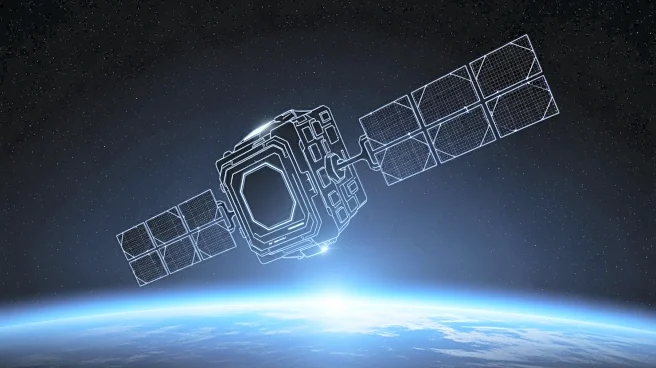
The European Space Agency's Proba-3 mission, which launched in December 2024, is facing difficulties after one of its spacecraft lost orientation. Proba-3 consists of two spacecraft designed to create artificial solar eclipses in space to study the sun's
corona. The Coronagraph vehicle, responsible for imaging the corona, lost orientation due to an anomaly, causing its solar panels to point away from the sun and depleting its batteries. This incident has put the mission at risk, as both spacecraft must maintain precise formation to function effectively. ESA is investigating the root cause of the anomaly and exploring ways to reestablish contact with the affected spacecraft.
Why It's Important?
The Proba-3 mission represents a significant advancement in space technology, demonstrating the ability of two spacecraft to fly in precise formation. The loss of orientation in one of the spacecraft highlights the challenges and risks associated with such complex missions. Understanding and resolving this issue is crucial for the success of the mission and future formation-flying missions. The ability to study the sun's corona without interference is vital for solar research, which has implications for understanding solar activity and its effects on Earth. The outcome of this investigation could influence future mission designs and strategies for dealing with similar anomalies.
What's Next?
ESA is actively working to diagnose the problem and restore the Coronagraph's functionality. Mission operators are considering moving the Occulter probe closer to assist in diagnosing the issue. Updates will be provided as new information becomes available. The resolution of this issue will be critical for the continuation of the Proba-3 mission and could provide valuable lessons for future space missions involving formation flying and solar observation.