






What's Happening?
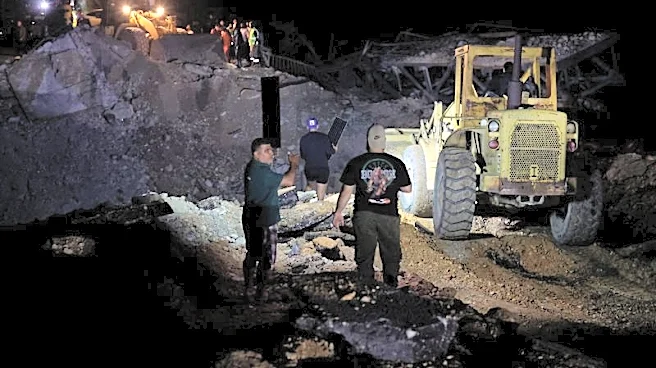
Recent developments in the ongoing conflict between Israel and militant groups in Lebanon and Gaza have highlighted the limitations of Israeli military strategy. In Lebanon, despite Israeli strikes on bridges over the Litani River, people have managed
to create temporary crossings, allowing for continued movement. This has raised questions about the effectiveness of targeting infrastructure as a military strategy. In Gaza, Israel's decision to destroy high-rise buildings in Gaza City was seen as more symbolic than a military necessity. These buildings were left standing for nearly two years before being targeted, suggesting that their destruction was intended to send a message rather than achieve a strategic military objective. The Israeli Defense Forces (IDF) have been engaged in a prolonged conflict on both fronts, with slow advances and significant civilian displacement.
Why It's Important?
The situation underscores the challenges faced by military forces in achieving strategic objectives through conventional means. The ability of civilians and militant groups to adapt to infrastructure destruction suggests that such tactics may not effectively neutralize threats. The symbolic nature of targeting high-rise buildings in Gaza indicates a shift towards psychological warfare, aiming to demonstrate power rather than achieve tangible military gains. This approach may have limited impact on the ground, as militant groups like Hezbollah and Hamas continue to operate despite Israeli efforts. The ongoing conflict has significant implications for regional stability and highlights the need for comprehensive strategies that integrate military, political, and diplomatic efforts.
What's Next?
The continuation of the conflict in Lebanon and Gaza is likely to prompt further military actions by Israel, potentially leading to increased regional tensions. The IDF may need to reassess its strategies to effectively counter the threats posed by Hezbollah and Hamas. This could involve a combination of military operations and diplomatic efforts to address the underlying causes of the conflict. The international community may also play a role in facilitating negotiations and supporting efforts to achieve a lasting resolution. The situation remains fluid, with potential for escalation if current strategies do not yield desired outcomes.
Beyond the Headlines
The conflict raises broader questions about the ethics and effectiveness of military strategies that target civilian infrastructure. The destruction of bridges and high-rise buildings can have long-term impacts on civilian populations, exacerbating humanitarian crises and fueling resentment. This highlights the need for military operations to be conducted with consideration for human rights and international law. Additionally, the reliance on symbolic actions may undermine efforts to achieve lasting peace, as they do not address the root causes of the conflict. A more holistic approach that includes political dialogue and economic development may be necessary to achieve sustainable peace in the region.