




What's Happening?
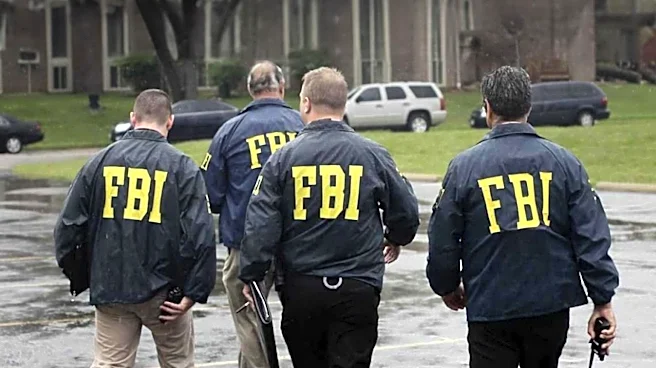
Federal agents, alongside local law enforcement, conducted a raid on Richardson Street in Billerica, Massachusetts, leading to the arrest of Aaron Brown, 46, on federal firearms charges. Prosecutors allege that Brown sold at least 10 privately made firearms,
commonly known as 'ghost guns,' along with ammunition and a suppressor, during an undercover investigation spanning approximately two years. The U.S. Attorney’s Office stated that Brown, a convicted felon, engaged in a series of firearms transactions between July 2024 and October with an individual cooperating with federal law enforcement. The investigation began with the sale of a privately made short-barreled rifle and ammunition in Tewksbury for about $1,500, followed by additional transactions in Billerica, Lowell, and other locations. The firearms allegedly sold included multiple privately made short-barreled rifles, firearm magazines, and a suppressor. Ghost guns are untraceable due to their lack of serial numbers, as they are assembled from individual parts rather than manufactured by licensed gun makers. Prosecutors also noted that some firearms contained out-of-state components and ammunition that traveled in interstate commerce. Brown allegedly discussed obtaining machine gun conversion device parts and future firearms transactions during a March 2025 meeting with a cooperating witness.
Why It's Important?
This federal raid and arrest highlight the ongoing efforts by U.S. law enforcement to combat the proliferation of 'ghost guns' and illegal firearms trafficking. Ghost guns pose a significant challenge to public safety because their lack of serial numbers makes them virtually untraceable, complicating investigations into gun violence. The alleged involvement of a convicted felon in dealing these weapons further underscores the risks associated with their availability. The interstate nature of the firearms and ammunition involved in this case, as alleged by prosecutors, demonstrates the broad reach of illegal gun networks and the necessity of federal intervention. This operation serves as a deterrent to others involved in illicit firearms sales and reinforces the commitment of federal agencies, such as the Bureau of Alcohol, Tobacco, Firearms and Explosives (ATF), to disrupt these activities. The case also brings attention to the broader debate surrounding gun control and the regulation of privately manufactured firearms in the United States.
What's Next?
Aaron Brown was scheduled to appear in federal court in Worcester following his arrest. He faces charges of engaging in the business of dealing firearms without a federal firearms license and being a felon in possession of firearms and ammunition. The charge of being a felon in possession of firearms and ammunition carries a maximum penalty of 15 years in prison, three years of supervised release, and a fine of up to $250,000. The charge of dealing firearms without a federal license carries a maximum penalty of five years in prison, three years of supervised release, and a fine of up to $250,000. The outcome of his arraignment was not immediately available. This case will proceed through the federal judicial system, potentially involving further investigations, plea negotiations, or a trial. The Billerica Police Department, alongside the ATF and State Police, will likely continue to monitor and investigate similar activities to prevent the illegal distribution of firearms.
Beyond the Headlines
The rise of 'ghost guns' represents a complex and evolving challenge for gun control advocates and law enforcement. These firearms bypass traditional regulatory frameworks because they are not manufactured by licensed dealers and often lack serial numbers. This makes it difficult to track their origins and use in crimes, effectively creating a loophole in existing gun laws. The alleged statements by Brown, suggesting he would make it appear he was armed if caught, highlight the dangerous mindset sometimes associated with individuals involved in illegal firearms trade. This incident also underscores the importance of inter-agency cooperation between federal, state, and local law enforcement in addressing sophisticated criminal enterprises. The legal and ethical implications of privately manufactured firearms will likely continue to be a subject of intense debate and legislative consideration at both state and federal levels, as authorities seek to balance Second Amendment rights with public safety concerns.