








What's Happening?
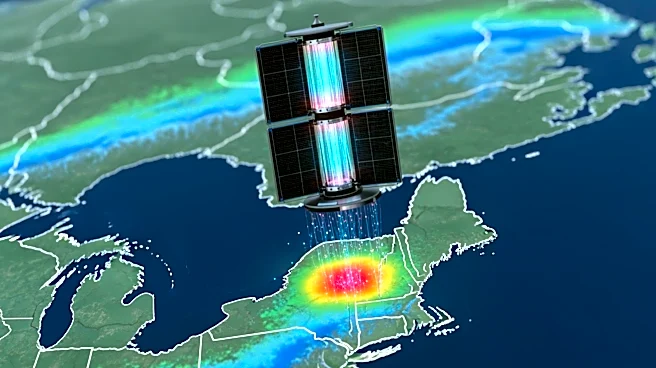
NASA's TEMPO (Tropospheric Emissions: Monitoring of Pollution) instrument has been actively monitoring air pollution over the New York-Washington corridor. On May 18, 2026, TEMPO detected high concentrations of nitrogen dioxide during the morning commute,
which later contributed to elevated ozone levels in the afternoon. This pattern is typical during warm months when chemical reactions accelerate due to heat. The New York State Department of Health issued a health advisory on May 17, warning sensitive groups about the potential health impacts of ozone. TEMPO's geostationary orbit allows it to provide hourly data, offering a more detailed view of pollution patterns compared to previous polar-orbiting satellites. This data is crucial for improving air quality forecasts and understanding the daily dynamics of urban pollution.
Why It's Important?
The data provided by TEMPO is significant for public health and environmental management. By offering real-time insights into air pollution levels, it helps authorities issue timely health advisories, potentially reducing exposure to harmful pollutants for millions of residents in the affected areas. The ability to track pollution on an hourly basis allows for more accurate forecasting and better understanding of how natural factors influence pollution levels. This can lead to improved public health policies and strategies to mitigate pollution impacts, particularly during high-risk periods such as heat waves. The information is also valuable for researchers studying the vertical distribution of ozone and its effects on air quality.
What's Next?
NASA's continued monitoring with TEMPO will enhance the accuracy of air quality forecasts and health advisories. Researchers will use the data to refine atmospheric models and improve understanding of pollution dynamics. This ongoing research could lead to more effective strategies for managing air quality and protecting public health. Additionally, the data will support efforts to address pollution-related challenges, such as those posed by climate change and urbanization. As TEMPO continues to provide detailed observations, it will play a crucial role in shaping future environmental policies and public health initiatives.
Beyond the Headlines
TEMPO's ability to detect both nitrogen dioxide and ozone provides a comprehensive view of air pollution dynamics. The instrument's data can reveal how pollution levels change throughout the day and how they are influenced by human activities and natural processes. This information is essential for understanding the broader environmental and health impacts of air pollution. By integrating TEMPO's data with other sources, researchers can gain insights into the complex interactions between different pollutants and their effects on the atmosphere. This knowledge is critical for developing effective strategies to reduce pollution and its associated health risks.