






What's Happening?
Ronald Saville, a 49-year-old man from Honolulu, Hawaii, has pleaded guilty to a federal charge of interstate communications containing threats against Michigan Governor Gretchen Whitmer. According to the U.S. Attorney's Office for the District of Hawaii, Saville admitted
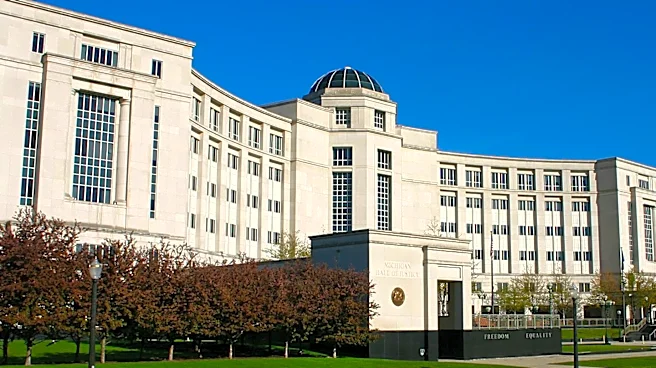
to sending emails to the Michigan State Police on May 9, referencing the state capitol building in Lansing and expressing an intent to use a weapon to kill people. A second email, directly addressed to Governor Whitmer, stated, "just to let you know on Tuesday second, Lancy, Michigan is never gonna be the same again going to walk into the state capital shoot it up and kill as many people as possible than that I'm coming for you[.]" Saville also reportedly called the FBI on May 12, reiterating his intention to kill Governor Whitmer and mentioning research into traveling to Michigan. The FBI investigated these threats, leading to Saville's arrest on May 26. This is not Saville's first offense of this nature; he was previously convicted twice in federal court for making threats against former U.S. President George W. Bush in 2006 and former U.S. District Judge Susan Oki Mollway of Hawaii in 2012. Governor Whitmer, a Democrat, is term-limited and will not be seeking re-election. She has consistently spoken out against political violence throughout her eight years in office, during which she has been the target of other threats.
Why It's Important?
This case underscores the persistent issue of threats against public officials in the United States, highlighting the vulnerability of elected leaders to politically motivated violence. The fact that Ronald Saville is a repeat offender, having previously threatened a former U.S. President and a federal judge, points to a pattern of behavior that poses a significant risk to public safety and democratic processes. The nature of the threats, specifically targeting a state capitol building and a governor, raises concerns about domestic extremism and the potential for real-world harm. Such incidents can have a chilling effect on political discourse, potentially deterring individuals from public service and fostering an environment of fear. The federal prosecution and potential five-year prison sentence, along with a substantial fine, demonstrate the legal system's commitment to addressing and deterring such threats, aiming to protect the integrity of governance and the safety of public servants. The case also brings attention to the broader societal challenge of managing individuals with a history of making violent threats, and the need for effective intervention strategies.
What's Next?
Ronald Saville faces a maximum of five years in prison and a fine of up to $250,000 for the charge of interstate communications containing threats. His sentencing will determine the specific penalties he will incur. This case will likely serve as a reminder of the ongoing efforts by federal law enforcement agencies, such as the FBI, to monitor and respond to threats against public officials. For Governor Whitmer, who is term-limited and will be leaving office, this incident reinforces the personal risks associated with high-profile political roles. The broader political landscape may continue to grapple with the implications of increased threats against elected officials, potentially leading to further discussions on security measures for public servants and legislative actions to address the root causes of such behavior. The outcome of this sentencing could also influence how similar cases are prosecuted in the future, setting a precedent for the severity of punishment for those who threaten government figures.
Beyond the Headlines
The repeated nature of Ronald Saville's threats, spanning over two decades and targeting various high-profile figures, suggests a deeper societal issue beyond individual criminal acts. This pattern raises questions about the efficacy of current legal and mental health systems in preventing recidivism among individuals who pose a persistent threat to public safety. The ease with which individuals can communicate threats across state lines via email and phone calls highlights the challenges law enforcement faces in a digitally connected world. Furthermore, the political climate, often characterized by heightened rhetoric and polarization, can inadvertently contribute to an environment where such threats are perceived as more legitimate or even encouraged by some. This case underscores the critical need for a comprehensive approach that includes robust law enforcement, mental health interventions, and a societal commitment to de-escalating political tensions to safeguard democratic institutions and the individuals who serve within them. The long-term implications involve examining how society can better protect its leaders while upholding fundamental rights and addressing underlying issues that fuel such dangerous behaviors.