









What's Happening?
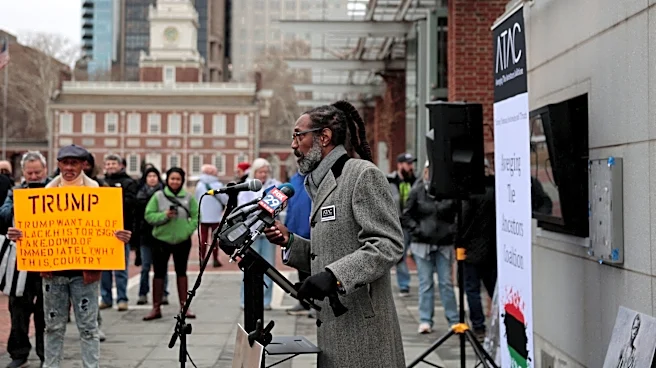
A federal appeals court has ruled that the Trump administration can replace the slavery exhibit at the President's House in Philadelphia. This decision overturns a previous district court injunction that had ordered the National Parks Service to restore
the panels removed from the site. The exhibit, which honors the lives of nine enslaved Africans held by President George Washington, was partially restored after a district court ruling but not all materials were returned. The appeals court found that the lower court did not have jurisdiction over the claims brought by the city of Philadelphia against the Interior Department and the National Park Service.
Why It's Important?
This ruling is significant as it addresses the contentious issue of how historical narratives, particularly those involving slavery, are presented in public spaces. The decision to allow the replacement of the exhibit reflects ongoing debates about historical representation and the role of government in shaping public memory. The outcome of this case could influence future decisions on how sensitive historical topics are handled in national parks and other public venues, impacting educational content and public understanding of American history.
What's Next?
The National Parks Service has proposed changes to the panels at the slavery memorial, which are expected to include more historical context. However, these changes have been criticized by advocacy groups for potentially distorting history. The city of Philadelphia and other stakeholders may continue to challenge the administration's actions, and further legal proceedings could ensue. The case highlights the need for ongoing dialogue and collaboration between government agencies, historians, and community groups to ensure accurate and inclusive historical representation.