
What's Happening?
A far-left activist group in Germany, known as the Vulkangruppe (Volcano Group), has claimed responsibility for a suspected arson attack that resulted in a significant power outage in Berlin. The incident
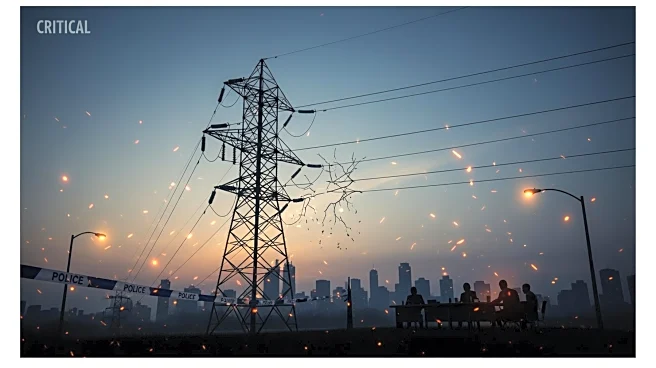
occurred early on Saturday when several cables on a bridge near a power plant in south-west Berlin were set on fire. Although the fire was quickly extinguished, it left around 45,000 households and 2,200 businesses without electricity. The group stated that their target was the fossil fuel economy, not the power supply itself. The outage has affected hospitals and businesses, with emergency power generators being deployed to critical facilities. As of Sunday, approximately 10,000 households and 300 businesses had their power restored, but full reconnection is expected to take until Thursday.
Why It's Important?
The attack highlights the vulnerabilities in urban infrastructure and the potential for activist groups to disrupt essential services. The incident has raised concerns about the security of energy supplies and the impact of such disruptions on public safety, particularly in critical facilities like hospitals. The group's actions have sparked a debate on the balance between activism and public safety, as well as the ethical implications of targeting infrastructure to make a political statement. The event underscores the need for enhanced security measures and contingency planning to protect against similar incidents in the future.
What's Next?
Authorities are continuing their investigation into the incident, with police considering the group's claim of responsibility as plausible. The focus will likely be on preventing future attacks and ensuring the security of critical infrastructure. The incident may prompt discussions on policy measures to address the root causes of such activism, including environmental concerns and the transition away from fossil fuels. Additionally, there may be increased scrutiny on the activities of activist groups and their methods of protest.
Beyond the Headlines
The attack raises broader questions about the role of activism in addressing climate change and the ethical boundaries of protest. It highlights the tension between urgent environmental action and the potential harm caused by disruptive tactics. The incident may influence public opinion on environmental activism and the methods used to advocate for change. It also underscores the importance of dialogue and collaboration between activists, policymakers, and industry leaders to find sustainable solutions to environmental challenges.