



What's Happening?
An international team of scientists has achieved a groundbreaking feat by drilling deeper than ever before beneath the West Antarctic Ice Sheet. This effort has revealed that the region was once, at least partially, an open ocean. The team, consisting
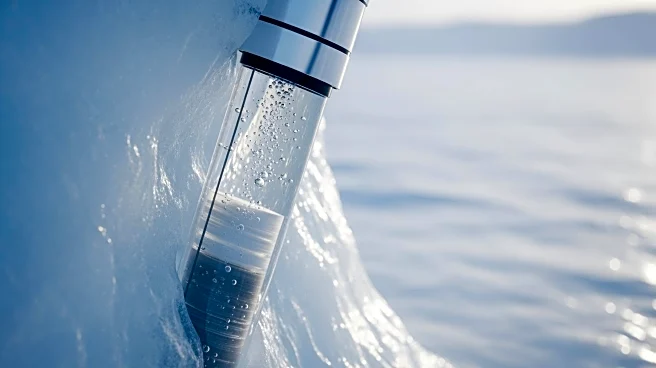
of 29 researchers, extracted samples that provide a glimpse into environmental conditions dating back up to 23 million years. These findings include periods when Earth's global average temperatures were significantly higher than two degrees Celsius above pre-industrial levels. The drilling, conducted at Crary Ice Rise on the Ross Ice Shelf, involved penetrating 523 meters of ice and 228 meters of ancient rock and mud. The samples retrieved contain shell fragments and remains of marine organisms, indicating the presence of open ocean conditions in the past.
Why It's Important?
The discovery is significant as it provides direct evidence of historical climate conditions, which can help scientists understand the factors that led to the retreat of the ice sheet. This knowledge is crucial for predicting future changes in the ice sheet's behavior in response to global warming. The West Antarctic Ice Sheet holds enough ice to potentially raise global sea levels by four to five meters, making its stability a critical concern for coastal regions worldwide. Understanding past climate conditions and ice sheet dynamics can inform models that predict how quickly the ice might melt under current and future climate scenarios, impacting global sea levels and climate policy decisions.
What's Next?
The core samples obtained from the drilling have been transported to Scott Base and will be sent to New Zealand for further analysis. This analysis will aim to refine the understanding of the ice sheet's historical behavior and its response to past climate changes. The findings could influence future climate models and inform international climate policy, particularly regarding sea level rise projections. Researchers will continue to study the samples to gain insights into the temperature thresholds that could trigger rapid ice loss, which is essential for preparing for potential future impacts on coastal communities.