



What's Happening?
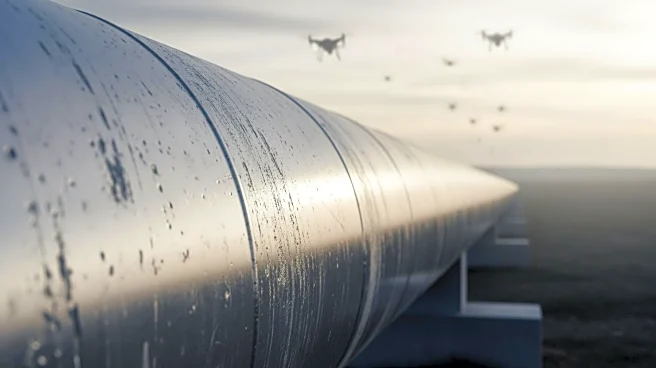
Oil exports from the Caspian Pipeline Consortium (CPC), which transports oil from Kazakhstan through a pipeline to a Russian Black Sea terminal, experienced a 12% decline in November compared to October. This decrease was attributed to a Ukrainian drone
attack on November 29, which severely damaged one of the three key exporting units. As a result, only one single point mooring (SPM-1) has been operational, while SPM-2 was damaged and SPM-3 has been under maintenance since mid-November. The exports fell to 5.088 million metric tons, or 1.34 million barrels per day, down from 1.52 million barrels per day in October. Despite this setback, CPC's exports from January to November increased by 15% compared to the previous year, reaching 66.541 million tons.
Why It's Important?
The decline in oil exports through the Caspian Pipeline highlights the vulnerability of critical energy infrastructure to geopolitical tensions and conflicts, such as the ongoing conflict involving Ukraine. This disruption not only affects Kazakhstan's oil export capacity but also has broader implications for global oil markets, potentially influencing oil prices and supply chains. The damage to the CPC terminal underscores the risks associated with energy transportation routes that pass through conflict zones. Additionally, Kazakhstan's decision to adjust its 2026 oil production plans due to expected maintenance and the damage to the CPC terminal could have long-term impacts on the country's oil output and economic stability.
What's Next?
Kazakhstan is likely to focus on repairing the damaged exporting units and ensuring the operational stability of the Caspian Pipeline. The country may also seek to enhance the security of its energy infrastructure to prevent future disruptions. Meanwhile, global oil markets will be closely monitoring the situation, as any prolonged reduction in Kazakhstan's oil exports could contribute to volatility in oil prices. Stakeholders, including international oil companies and governments, may engage in diplomatic efforts to address the security challenges facing energy transportation routes in the region.